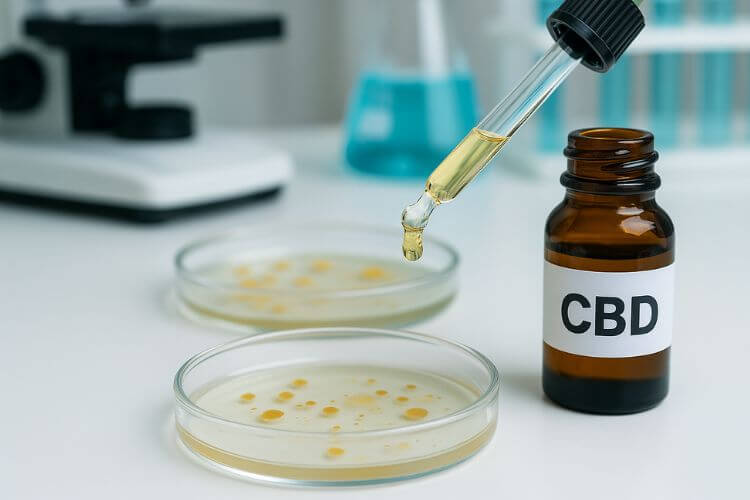
Could Cannabidiol Help Fight Infections?
Antibiotic resistance is on the rise, and research shows CBD may have surprising antibacterial potential even against resistant bacteria.
Bacterial infections are a common part of life, from everyday skin problems to more serious illnesses. But over the years, these infections have become harder to treat. Overuse of antibiotics has led to bacteria that are resistant to traditional medicines, often called “superbugs.”
For researchers, this is one of the biggest health challenges of our time. That is why scientists are constantly testing new approaches.
They turned to cannabidiol (CBD), a compound already known for its wide interest in wellness, to see if it had properties that could help fight bacteria.
What the Researchers Tested
They looked carefully at CBD’s activity in different conditions. The researchers carried out several tests, both in the lab and in live animal models, to measure CBD’s antibacterial potential:
- Gram-positive bacteria: CBD was tested on multiple Gram-positive strains, including those resistant to common antibiotics.
- Biofilms: The ability of CBD to act on bacterial biofilms was examined. Biofilms are clusters of bacteria protected by a strong barrier, making them far more difficult to treat than free-floating bacteria.
- Gram-negative bacteria: While past studies suggested CBD was ineffective against Gram-negative strains, the researchers tested this directly.
- Resistance development: They checked whether bacteria exposed to CBD would quickly develop resistance, a major issue with standard antibiotics.
- Animal infection model: To move beyond the petri dish, they applied CBD topically to skin infection models in animals, observing how it worked in a living system.
This step-by-step approach allowed the team to see not just if CBD could kill bacteria, but also how broad and reliable that effect might be.
What They Found
The findings were striking and extended beyond what many expected:
- Active against Gram-positive bacteria: CBD showed strong antibacterial activity against Gram-positive bacteria, including antibiotic-resistant strains like Staphylococcus aureus.
- Impact on biofilms: CBD was able to disrupt biofilms. This is important because biofilms protect bacteria from many treatments, and breaking them apart makes infections easier to manage.
- Some Gram-negative action: The researchers discovered that CBD could also act on certain Gram-negative bacteria. One example was Neisseria gonorrhoeae, a pathogen known for being difficult to treat.
- Low resistance potential: Even when bacteria were repeatedly exposed to CBD, they did not quickly develop resistance. This is an important advantage, given how easily bacteria adapt to many antibiotics.
- Animal model success: In infected skin models, topical CBD reduced bacterial levels without causing harmful side effects. This suggests that CBD might be useful in treating surface-level infections.
Why These Findings Matter
These results highlight CBD’s potential as an antibacterial agent. The fact that it worked against resistant Gram-positive bacteria, disrupted biofilms, and even showed activity against certain Gram-negative strains makes it a compound worth studying further.
The resistance testing also adds weight to the findings. Unlike many antibiotics that lose effectiveness as bacteria adapt, CBD showed a low tendency to trigger resistance.
Combined with its activity in live animal models, this makes CBD an interesting candidate for further research into antibacterial therapies.
What This Means for You
While this research doesn’t mean CBD should replace prescribed antibiotics, it does highlight something exciting: CBD is showing properties beyond what most people think of, not just relaxation, stress relief, or sleep support, but also unique potential being explored in labs around the world.
For you, that means choosing high-quality CBD products isn’t just about wellness today, it’s about being part of a movement where science is constantly uncovering new benefits.
Whether you’re using CBD oils to support calm, gummies for better rest, or topicals for recovery, you’re tapping into a product that researchers continue to study for its wide-ranging possibilities.
Original Study Section
Title: The antimicrobial potential of cannabidiol
Date: January 2021
Authors: Mark A. T. Blaskovich; Angela M. Kavanagh; Alysha G. Elliott; Bing Zhang; Soumya Ramu; Maite Amado; Gabrielle J. Lowe; Alexandra O. Hinton; Do Minh Thu Pham; Johannes Zuegg; Neil Beare; Diana Quach; Marc D. Sharp; Joe Pogliano; Ashleigh P. Rogers; Dena Lyras; Lendl Tan; Nicholas P. West; David W. Crawford; Marnie L. Peterson; Matthew Callahan; Michael Thurn
Link to Study: Read on Nature

Contributing Expert
Alan first discovered CBD while recovering from a sports injury — and he’s been a believer ever since. Over the years, he’s used CBD for sleep, skincare, easing anxiety, and even helping his family pet stay calm. With more than 20 years of experience running a marketing business, Alan now enjoys sharing scientific studies and personal experience with customers at Flourish + Live Well.