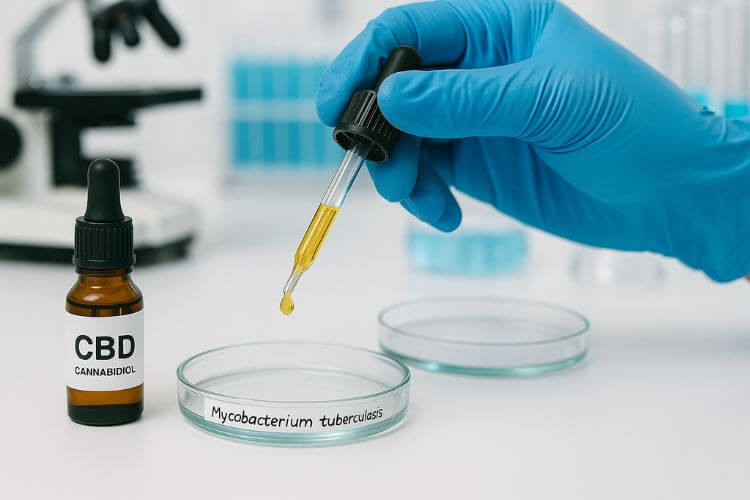
Could cannabidiol help fight one of the world’s oldest and deadliest infections? A new study offers hope.
Most of us know the feeling of coming down with something, maybe it’s a lingering cough or a flu that refuses to go away. Now imagine an illness that doesn’t just last weeks, but months, sometimes years. That’s the reality for millions of people around the world living with tuberculosis (TB).
TB is an infection that mainly attacks the lungs, but it can also spread to other parts of the body. For centuries, it has been one of humanity’s most feared killers. Even today, with modern medicine, TB still ranks among the top 10 causes of death worldwide.
Treatment exists, but it’s tough: long courses of antibiotics, complex drug regimens, and side effects that can leave patients exhausted.
With so many challenges, researchers are constantly looking for new ways to fight TB. And now, CBD, the same natural compound many people know for stress relief and better sleep, is being investigated as a potential helper in this fight.
Why Scientists Looked at CBD
CBD (cannabidiol) is widely known as a safe, non-psychoactive compound found in the plant, which means it doesn’t cause a ‘high’ and can be used safely without affecting your clarity.
Over the years, CBD has been studied for pain, stress, sleep, and even skincare. But another property doesn’t get talked about as much: its antibacterial activity.
That’s why this new study was launched. Researchers wanted to know if CBD could work against Mycobacterium tuberculosis, the bacteria that cause TB. And not just in a petri dish, but also inside the very immune cells that TB is known to hide in.
How the Research Was Done
To keep it simple, the researchers tested CBD in three main ways:
- Stopping bacteria in their tracks: They measured how well CBD could prevent TB bacteria from multiplying.
- Checking safety for human cells: They tested whether the same CBD doses would harm human immune cells.
- Fighting bacteria inside cells: Since TB can hide inside immune cells (called macrophages), they infected these cells in the lab and then treated them with CBD to see if it could reduce the bacteria inside.
This approach gave them a clear picture: could CBD stop TB bacteria, was it safe for humans, and could it fight infection where it matters most?
What the Study Found
The results were encouraging and showed real promise:
- CBD slowed TB bacteria growth. It stopped M. smegmatis at 100 μM and M. tuberculosis H37Rv at just 25 μM.
- CBD worked inside infected cells. When macrophages were infected with TB, adding CBD reduced the number of live bacteria after only 24 hours.
- CBD was safe for human cells. At antibacterial concentrations, CBD showed no toxicity. In fact, the safety margin (called a selectivity index) was high—meaning it targeted bacteria without harming healthy cells.
Why This Matters for Everyday People
If you’ve ever felt frustrated by how long recovery from an illness can take, you can understand why this matters. TB treatment is long and draining, and any new approach that could shorten or simplify the process would be life-changing for patients.
This study doesn’t mean CBD is ready to be used as a TB drug. It was done in the lab, not on patients. But it shows that CBD has real antibacterial power, strong enough to reduce TB bacteria inside the very cells that shelter them. That’s a big step forward in the search for new solutions.
A Safer Alternative in the Making?
One of the most promising parts of this research is that CBD appeared safe at the levels that killed TB bacteria. Traditional TB drugs, while effective, often come with harsh side effects that wear patients down. A treatment option that combines safety with effectiveness could make the fight against TB less grueling.
Again, this is just the beginning. Clinical trials in humans would be needed to know if CBD could really become part of TB treatment. But it shows why CBD is being studied so widely, not just for wellness, but also for serious medical challenges.
What This Could Mean for the Future
For now, CBD remains a supplement many people use for calm, sleep, or general balance. But in the future, research like this could open doors to something much bigger. Imagine CBD-based medicines that help not only with mood or relaxation, but also with global health challenges like TB.
Original Study Section
Title: Antimicrobial Effect of Cannabidiol on Intracellular Mycobacterium tuberculosis
Date: April 2024
Authors: Camila Belen Martinena, Merlina Corleto, Melina María Belén Martínez, Nicolás Oscar Amiano, Verónica Edith García, Paulo Cesar Maffia and Nancy Liliana Tateosian
Link: Read the study here

Contributing Expert
Alan first discovered CBD while recovering from a sports injury — and he’s been a believer ever since. Over the years, he’s used CBD for sleep, skincare, easing anxiety, and even helping his family pet stay calm. With more than 20 years of experience running a marketing business, Alan now enjoys sharing scientific studies and personal experience with customers at Flourish + Live Well.