What New Research Reveals
Antibiotic resistance is one of the most pressing health challenges of our time. As bacteria evolve to resist conventional antibiotics, researchers are investigating alternative antimicrobial compounds—and CBD has emerged as a promising candidate.
The Growing Body of Evidence
Research spanning from 2022 through 2025 has examined CBD’s effects on various bacterial pathogens. The results consistently demonstrate that CBD possesses genuine antibacterial activity.
How CBD Kills Bacteria
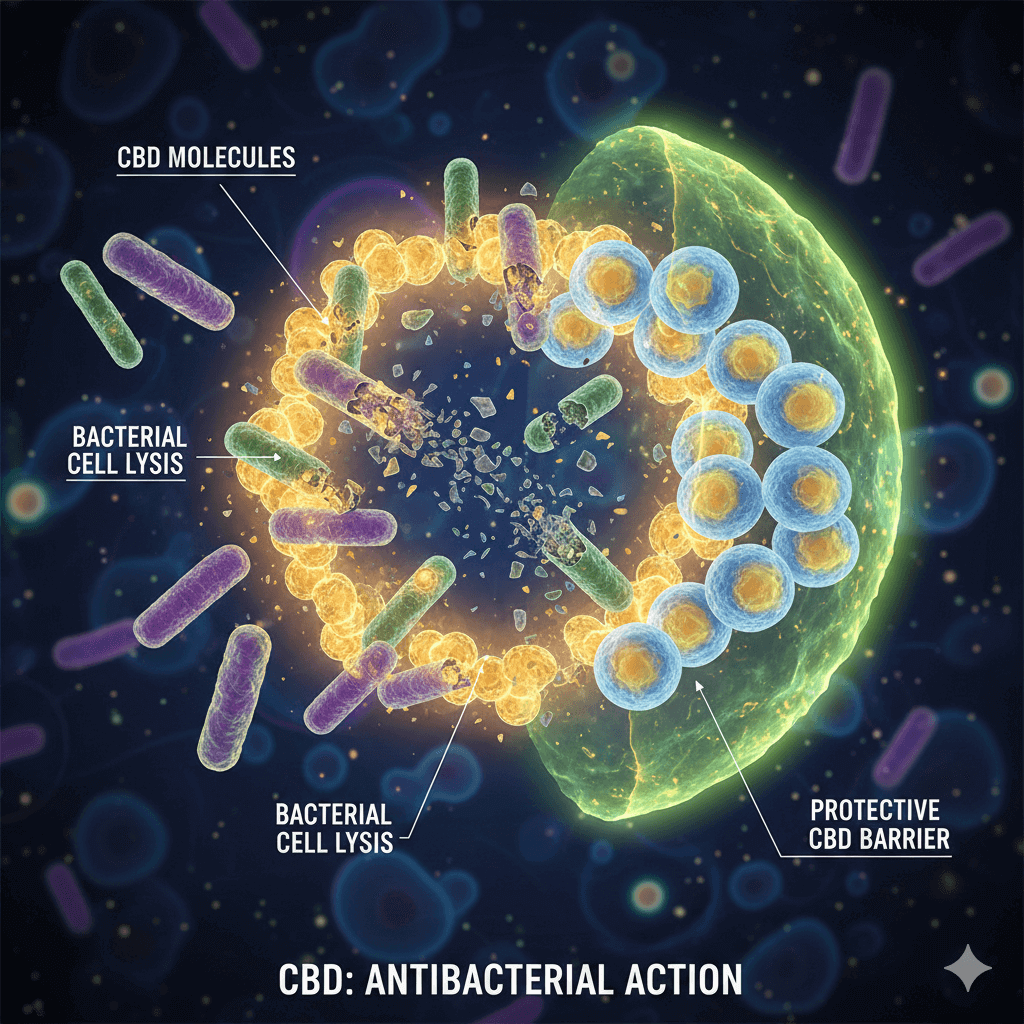
Studies suggest CBD’s antibacterial function works by disrupting the cell membrane of bacteria. This mechanism applies to both Gram-positive bacteria (like Staphylococcus) and Gram-negative bacteria (like Salmonella).
When CBD compromises the bacterial cell membrane, it essentially causes the bacteria to leak and die—a different mechanism than many conventional antibiotics use.
Which Bacteria Does CBD Fight?
Research has documented CBD’s antibacterial activity against several clinically important pathogens:
- Staphylococcus aureus: A common cause of skin infections and more serious conditions
- Streptococcus pneumoniae: Responsible for pneumonia and other respiratory infections
- Clostridiosis difficile: A dangerous intestinal infection
- Salmonella species: Causes food poisoning and gastrointestinal illness
- Enterococcus species: Can cause urinary tract, wound, and bloodstream infections
- Neisseria, Moraxella catarrhalis, and Legionella pneumophila: Various respiratory pathogens
The Dose-Dependent Effect
Research on Salmonella demonstrated that CBD’s antibacterial activity is dose-dependent. Higher concentrations of CBD showed stronger bacterial inhibition, with zones of inhibition (areas where bacteria couldn’t grow) increasing with CBD concentration.
Interestingly, some studies observed rapid resistance development to very low concentrations of CBD, but higher therapeutic doses maintained effectiveness.
Comparing CBD to Conventional Antibiotics
One study compared CBD’s effectiveness to ampicillin, a common antibiotic, against Salmonella. CBD concentrations of 1.25 and 0.125 μg/mL inhibited bacterial growth over 24 hours after a single treatment—results similar to ampicillin treatment.
Clinical Implications
While CBD should not replace doctor-prescribed antibiotics for bacterial infections, this research has important implications:
Topical applications: CBD’s antibacterial properties support its use in skincare products, particularly for acne and wound care.
Supplemental protection: CBD might offer additional antimicrobial support as part of a comprehensive wellness approach.
Future therapeutics: As research continues, CBD could potentially be developed into novel antimicrobial treatments.
The Path Forward
A 2025 study on CBD and Enterococcus concluded that this work “confirms the antibacterial activity of CBD on Enterococcus spp., providing a solid basis for further research that can help” develop new therapeutic strategies.
The researchers emphasize that more studies are needed, but the foundation is strong.
About the Studies
Primary Study Title: Cannabis sativa CBD Extract Shows Promising Antibacterial Activity
Authors: Zuzanna Kraszewska, Katarzyna Grudlewska-Buda, Kacper Wnuk, Ewa Wałecka-Zacharska, Eugenia Gospodarek-Komkowska, Krzysztof Skowron
Published: April 2022 (foundational study)
Key Finding: CBD disrupts bacterial cell membranes of both Gram-positive and Gram-negative bacteria, showing dose-dependent antibacterial effects
Supporting Study: “Cannabidiol (CBD) and Other Cannabinoids as a Promising Antimicrobial Agent“
Authors: Logan Gildea, Joseph Atia Ayariga, Olufemi S Ajayi, Junhuan Xu, Robert Villafane, Michelle Samuel-Foo
Published: December 2025
Key Finding: Confirms antibacterial activity of CBD on Enterococcus species

Contributing Expert
Alan first discovered CBD while recovering from a sports injury — and he’s been an advocate ever since. Over the years, he’s used CBD for sleep, skincare, easing anxiety, and even helping his family pet stay calm. With more than 20 years of experience running a marketing business, Alan now enjoys sharing scientific studies and personal experience with customers at Flourish + Live Well.