Why Researchers in Spain Are Coating Fresh Strawberries with CBD — and What the Science of Natural Antimicrobials Is Starting to Tell Us
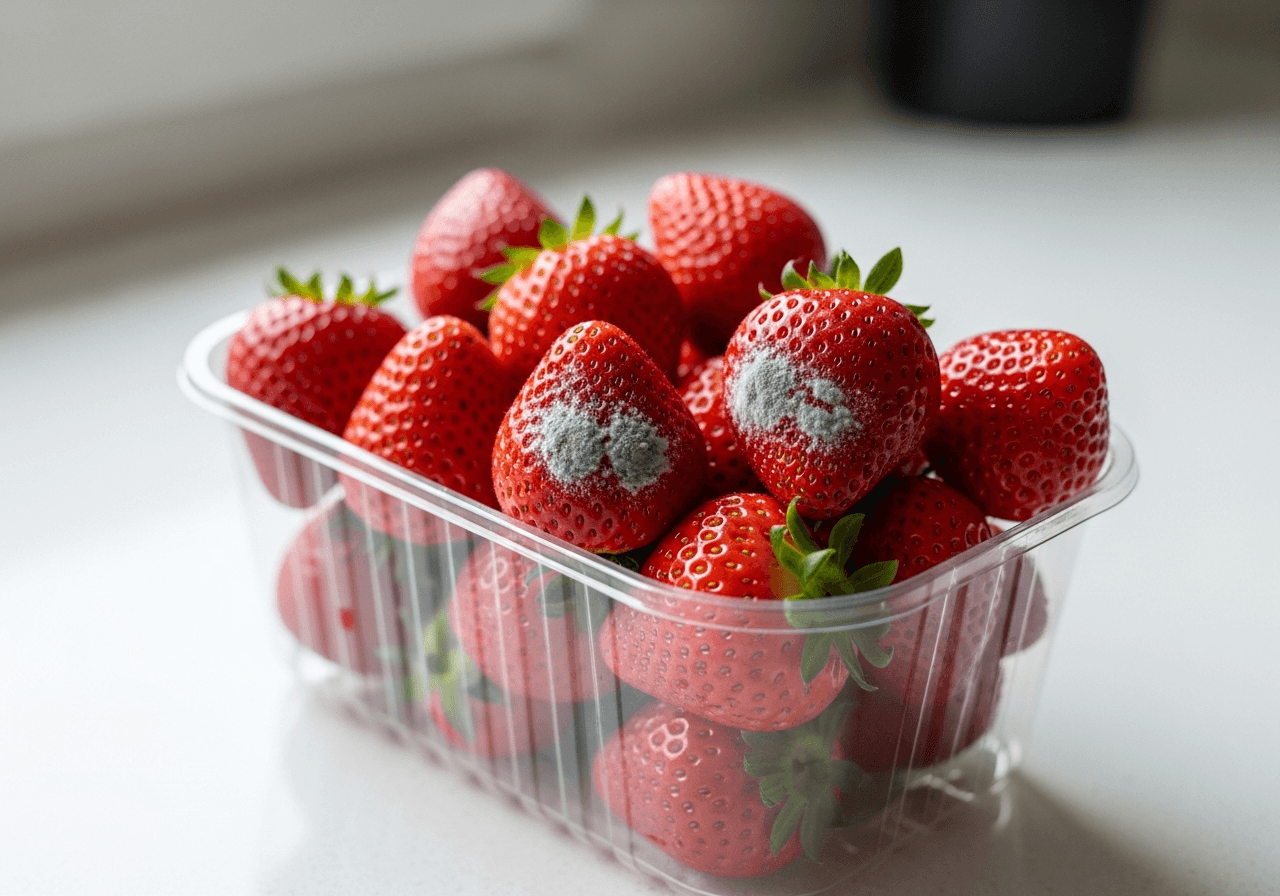
There is a spoilage problem that every grocery shopper knows intimately. Strawberries look perfect on the shelf on Monday and are growing gray mold by Thursday. They are among the most perishable fresh produce available, and the bacteria and molds that drive that deterioration — hitching rides from the farm through the distribution chain to your refrigerator — have been the focus of food safety researchers for decades. Conventional preservatives have helped, but they come with their own concerns; the search for natural, food-safe alternatives has been a consistent thread in applied food science. A research team at Spain’s University of Córdoba just published results that point in an unexpected direction.
The Research Team and Why They Chose Cannabinoids
A team from the University of Córdoba’s Department of Bromatology and Food Technology published a study in 2026 in Chemical Engineering Transactions examining two phytocannabinoids from Cannabis sativa: cannabidiol (CBD) and cannabigerol (CBG). Their research question had nothing to do with wellness or supplementation. They wanted to know whether highly purified versions of these plant compounds could fight the bacteria and molds responsible for foodborne illness and produce spoilage, and whether a CBD-based edible coating could extend the shelf life of fresh strawberries.
What catches my attention about this team is the depth of subject-matter expertise they bring to the question. The lead researcher, Laura Rabasco-Vílchez, built her doctoral thesis at UCO around exactly this problem: sustainable bio-preservation methods for strawberries and tomatoes, developed as part of UCO’s BioFreshCloud project. Co-author Arícia Possas has spent her career on predictive microbiology and quantitative microbial risk assessment in food systems, with prior work specifically on Listeria monocytogenes, one of the more serious foodborne pathogens. Francisco Jiménez-Jiménez brings food technology and engineering expertise to the team. This is not a wellness industry study; it is a food safety research group asking whether a plant compound that happens to be a cannabinoid can solve a practical, expensive, and well-documented problem.
What CBD and CBG Actually Do to Bacteria
Before getting to the 2026 findings, it is worth understanding why phytocannabinoids are being studied as antimicrobials at all, because it is not obvious.
Research published in the International Journal of Molecular Sciences in 2023 by Luz-Veiga and colleagues at the Universidade Católica Portuguesa tested both CBD and CBG against a range of bacteria and fungi. The organisms tested included gram-positive bacteria (including Staphylococcus aureus, S. epidermidis, Streptococcus pyogenes, and Cutibacterium acnes) and gram-negative bacteria (Pseudomonas aeruginosa and Escherichia coli), as well as the fungal pathogen Candida albicans.
Both compounds showed measurable antimicrobial activity. Cannabigerol performed more strongly overall, with particularly notable results against gram-negative bacteria; those are generally considered harder to treat with natural compounds because of their additional outer membrane. The proposed mechanism involves the lipophilic nature of phytocannabinoids: they are drawn to the fatty structures in bacterial cell membranes, where they can interfere with membrane integrity in ways that make it difficult for the bacterium to maintain its internal environment.
This has direct relevance to food safety. The most commonly cited pathogens in fresh produce contamination cases, including Listeria monocytogenes, Salmonella species, and E. coli O157:H7, fall into the gram-positive and gram-negative categories the research teams have been examining. The UCO team’s food safety background means they are working with exactly those organisms in mind.
The 2026 Study: Phytocannabinoids on Fresh Strawberries
The 2026 University of Córdoba study moved the research into applied territory. The team evaluated highly purified CBD and CBG from Cannabis sativa against key foodborne pathogens and spoilage molds, then went further: they developed a CBD-based edible coating and applied it to fresh strawberries to assess its effect on quality and shelf life.
For readers who haven’t encountered edible coatings before, they are thin layers of food-safe material applied directly to fresh produce. The consumer either eats them along with the food or they break down naturally before the produce reaches the table. Common base materials include alginate (from seaweed) and chitosan (from shellfish). When the coating incorporates an active antimicrobial compound, it provides ongoing protection at the surface of the produce, which is where contamination and spoilage begin.
This approach has been explored before. A 2023 study from Thammasat University in Thailand (Sukhavattanakul et al., ACS Applied Materials & Interfaces) tested CBD-loaded nanoparticles in an alginate coating on fresh strawberries and found delayed deterioration, maintained color and firmness, and measurable antifungal and antibacterial effects over a 15-day storage period. The UCO team’s 2026 study adds to this foundation, using highly purified phytocannabinoids and examining the individual contributions of CBD and CBG.
What This Means for Us
A few things worth taking from this line of research:
- The antimicrobial science for CBD and CBG is being validated in applied settings. When food safety researchers at an established university program are using phytocannabinoids as their test compounds, it reflects genuine scientific confidence in the basic antimicrobial properties of these substances.
- CBG is proving to be more than just a precursor to CBD. Research is increasingly suggesting that cannabigerol may show stronger antimicrobial activity than cannabidiol in some applications; the emerging literature is worth watching.
- This is food safety research, not supplement marketing. The team at UCO’s Bromatology department is approaching these compounds as potential natural alternatives to synthetic preservatives, which is a different and arguably more rigorous frame than most of what the CBD industry produces.
- The same antimicrobial properties studied in food preservation have also been examined in skin applications. The Luz-Veiga 2023 study was specifically designed to test CBD and CBG against skin-relevant pathogens and concluded that both compounds show promise as topical antimicrobial agents. The science is consistent across contexts.
- Full-spectrum products may carry more relevance here than isolates. When CBD and CBG appear together in a full-spectrum formulation, both compounds’ antimicrobial properties contribute to the picture. This is an area where the research is still developing.
Limitations Worth Knowing
Conference proceedings papers like this one go through a review process, but it is typically less rigorous than the peer review at dedicated food science or microbiology journals. The 2026 UCO study should be treated as meaningful preliminary evidence, consistent with a larger body of research, rather than a settled conclusion.
The gap between laboratory findings and commercial application is also real and worth naming. Moving from “these cannabinoids have antimicrobial properties” to “this edible coating is approved for use in your food supply” requires navigating regulatory pathways, scaling challenges, and cost structures that early-stage research doesn’t address. This is science pointing in a promising direction; it is not a technology that is close to your refrigerator yet.
The Bigger Picture
What this study adds to the evidence base is specific and useful: a food safety research team with deep expertise in strawberry preservation and microbial risk assessment found CBD and CBG worth evaluating as antimicrobials against foodborne pathogens, then applied the results to fresh produce. The broader antimicrobial case for phytocannabinoids is building across multiple research groups and methods. What we still don’t know includes the precise mechanisms for each pathogen type, the effective concentrations that translate to practical applications, and how regulatory pathways will shape whether any of this reaches commercial use.
The University of Córdoba group has been working in this space for years, and their 2026 work appearing in a chemical engineering journal suggests the research is moving toward applied process development, not just basic science. That is worth paying attention to.
About the Original Study
Title: Evaluation of Phytocannabinoid-Based Edible Coating as a Natural Antimicrobial Solution to Improve Strawberry Quality and Shelf Life Published: 2026 Authors:
- Laura Rabasco-Vílchez — PhD, Department of Bromatology and Food Technology, University of Córdoba (Spain); doctoral research focused on bio-preservation of strawberries and tomatoes
- Francisco Jiménez-Jiménez — Doctor of Engineering, Department of Bromatology and Food Technology, University of Córdoba (Spain)
- Arícia Possas — Assistant Professor, PhD, Department of Bromatology and Food Technology, University of Córdoba (Spain); research focus on predictive microbiology and microbial risk assessment in food systems
Link: https://www.cetjournal.it/cet/26/124/050.pdf

Contributing Expert
Alan first discovered CBD while recovering from a sports injury — and he’s been an advocate ever since. Over the years, he’s used CBD for sleep, skincare, easing anxiety, and even helping his family pet stay calm. With more than 20 years of experience running a marketing business, Alan now enjoys sharing scientific studies and personal experience with customers at Flourish + Live Well.