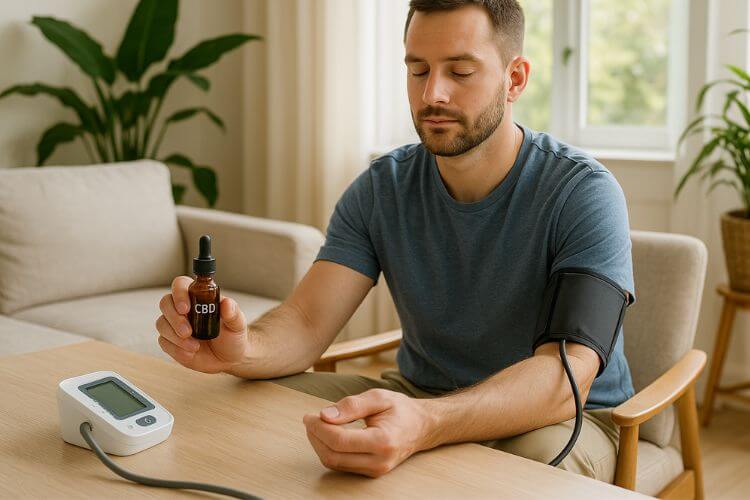
Could a single dose of cannabidiol help keep your blood pressure in check when life gets stressful? Research offers some intriguing clues.
Think about the last time you had to sit through an important meeting, run late to an appointment, or deal with back-to-back deadlines. Chances are, your heart rate picked up, your shoulders tensed, and your blood pressure quietly rose.
These small surges might seem harmless in the moment, but over time, constant stress takes a toll on the cardiovascular system.
That’s why researchers are looking closely at cannabidiol (CBD), a naturally occurring compound that interacts with the body’s stress response in unique ways. Unlike many quick-fix solutions, CBD doesn’t cloud your judgment or alter your state of mind.
Instead, early evidence suggests it may offer a subtle but meaningful benefit: helping your body stay calmer under pressure.
Why Blood Pressure Matters More Than You Think
High blood pressure has earned the nickname “silent killer” for good reason. It can creep upward without obvious symptoms, straining arteries, the heart, and even the brain over the years. Even small reductions in blood pressure just a few millimeters of mercury (mmHg) can make a difference in long-term heart health.
For example, a drop of 5 mmHg in systolic blood pressure has been linked to significantly lower risks of stroke and coronary disease in large population studies.
That’s why researchers wanted to know: if CBD can ease anxiety and improve vascular relaxation in preclinical studies, could it also move the needle on blood pressure in real people?
The Study That Put CBD to the Test
In 2017, a small team of researchers in the UK conducted one of the first human trials to investigate CBD’s effect on cardiovascular function. A group of healthy young men participated in a randomized, double-blind, placebo-controlled crossover study, the gold standard for this type of research.
Each participant received either a single 600 mg dose of CBD or a placebo on separate days. Their cardiovascular responses were measured at rest and during stress challenges such as exercise, mental arithmetic, and cold exposure.
Here’s what they found:
- Blood pressure dipped: Resting systolic blood pressure dropped by roughly 6 mmHg after CBD.
- Stress response softened: During stressful tasks, the usual spike in blood pressure was noticeably blunted compared to placebo.
- Vessels relaxed: Measures of vascular resistance suggested improved blood flow and vessel flexibility.
- Heart rate rose slightly: Heart rate increased by about 10 beats per minute, a natural compensation to maintain overall circulation.
- Safety profile: No serious adverse events were reported in this small trial, suggesting CBD was generally well tolerated at this high dose.
For a single dose in a small group, those are meaningful shifts. They suggest CBD may help the body handle cardiovascular stress more smoothly.
How CBD Might Be Working
The study offers some good clues. CBD is thought to:
- Relax blood vessels (vasodilation): By reducing vascular resistance, CBD may allow smoother blood flow.
- Ease stress hormone surges: It appears to blunt the sympathetic nervous system’s “fight-or-flight” response, which is directly tied to blood pressure spikes.
- Act as an antioxidant: By countering oxidative stress, CBD may reduce damage to vessel walls.
- Modulate inflammation: Lower vascular inflammation could support healthier long-term circulation.
All of these pathways work together, painting a picture of CBD as a gentle regulator rather than a blunt force intervention.
What This Means for Your Stress and Heart Health
So, what’s the takeaway for you if you’re curious about CBD and cardiovascular health?
- A gentler stress response: If your blood pressure tends to jump in tense moments, CBD may help cushion that reaction.
- No mental fog: Because CBD isn’t intoxicating, you can go about your day without worrying about impairment.
- A complement, not a cure: CBD isn’t a substitute for healthy habits or prescribed treatment. Think of it as one more tool in your toolkit.
- Watch the heart rate: Since heart rate rose in the study, people with cardiac concerns should be cautious and consult a healthcare provider.
- Safety looks good so far: This trial reported no serious adverse events, which is encouraging, though more research in larger groups is still needed.
- Long-term potential: Even modest daily improvements in blood pressure, if sustained, could add up to significant protection over time.
The Bigger Picture
What makes this study exciting is that it was one of the first to look at real human outcomes, not just lab experiments. While the sample was small and the dose relatively high, it opens the door for future trials on different populations, older adults, women, or people already living with hypertension.
It also reinforces a broader point: cardiovascular health isn’t just about cholesterol and exercise. Stress is a powerful factor, and managing how your body responds to it is just as important. CBD, with its subtle calming effects, might play a role in helping some people achieve that balance.
Original Study Section
Title: A single dose of cannabidiol reduces blood pressure in healthy volunteers in a randomized crossover study
Date: June 2017
Authors: Khalid A. Jadoon, Garry D. Tan, Saoirse E. O’Sullivan
Link to Study: Read it on PubMed Central

Contributing Expert
Alan first discovered CBD while recovering from a sports injury — and he’s been a believer ever since. Over the years, he’s used CBD for sleep, skincare, easing anxiety, and even helping his family pet stay calm. With more than 20 years of experience running a marketing business, Alan now enjoys sharing scientific studies and personal experience with customers at Flourish + Live Well.