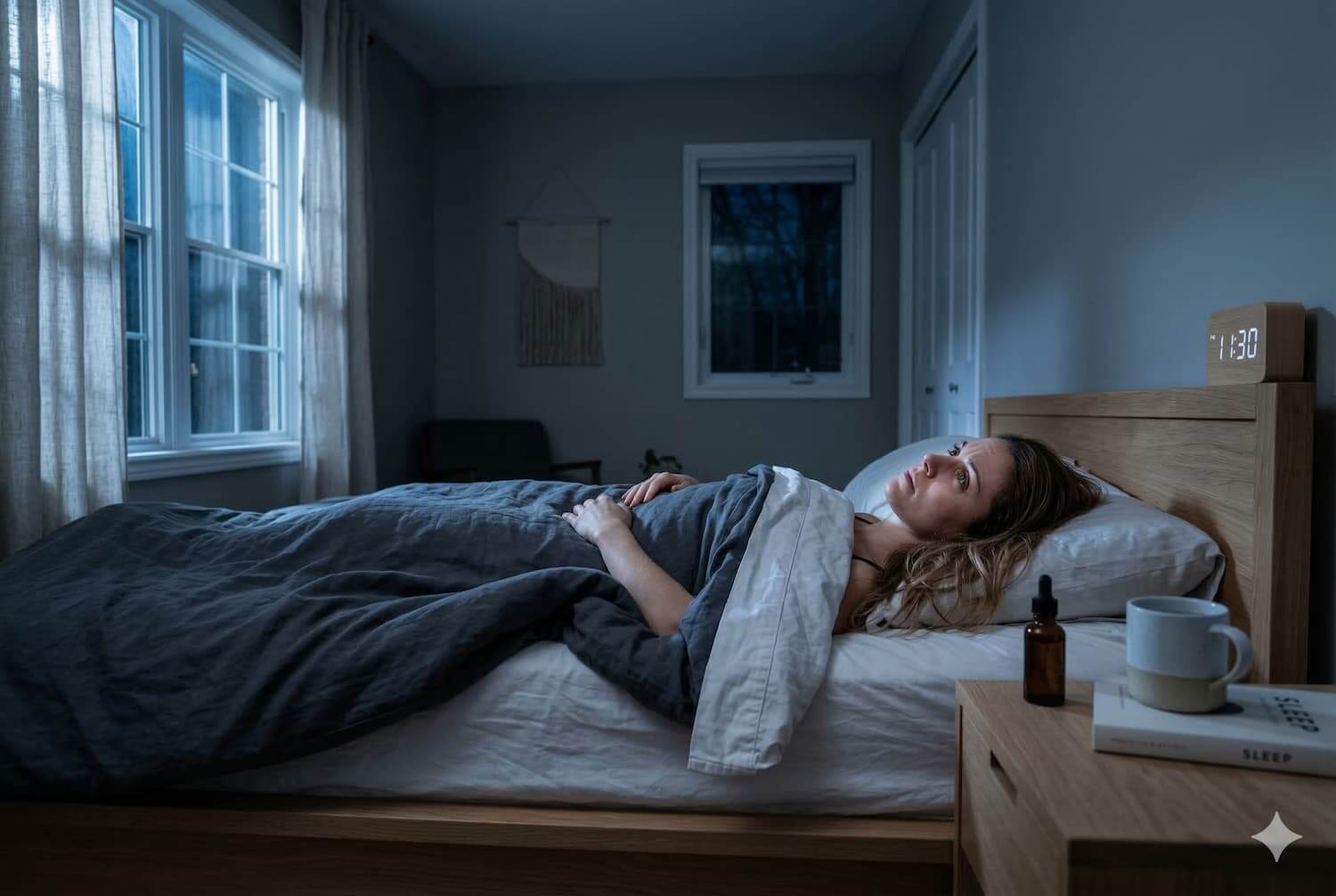
When Your Brain Won’t Shut Off – How a clinical trial tested CBD for sleep in people who can’t stop thinking at night.
You know the routine. You’re exhausted. You slip under the covers, close your eyes, and then your brain decides it’s time to replay every awkward conversation from the last decade, rehearse tomorrow’s meeting, and solve problems that don’t even exist yet.
If that sounds familiar, you’re part of a massive group of high‑trait worriers—people whose minds run hot even when their bodies are begging for rest. And according to a recent randomized, placebo‑controlled trial, cannabidiol (CBD) might actually help some of those people sleep better.
What did this trial actually do?
The study, published in 2026 in Experimental and Clinical Psychopharmacology, enrolled adults who self‑identified as chronic worriers and who also reported sleep disturbances. Researchers wanted to see if a single acute dose of CBD could improve sleep quality compared to a placebo.
Here’s how it worked:
- Participants were randomized to receive CBD (specific dose detailed in the trial) or a placebo before bed.
- Sleep was measured using both subjective reports (how well people felt they slept) and objective metrics like sleep efficiency, time to fall asleep, and total sleep time.
- The trial controlled for other variables—caffeine intake, sleep environment, baseline anxiety levels—to isolate CBD’s effect.
The goal wasn’t to claim CBD “cures insomnia.” The goal was to see if CBD could provide measurable, meaningful improvements in sleep for people whose racing thoughts interfere with rest.
What did they find?
The results showed that participants taking CBD experienced improvements in several sleep measures compared to placebo:
- Subjective sleep quality improved—people reported feeling like they slept better and woke more rested.
- Sleep onset latency (time to fall asleep) decreased in the CBD group.
- Some participants also saw reductions in nighttime waking, though this varied by individual.
Importantly, CBD was well-tolerated at the dose tested, with minimal side effects reported. The authors noted that CBD’s potential anxiolytic (anxiety‑reducing) properties may contribute to its sleep benefits, especially in people whose sleep problems are tied to worry and rumination.
This builds on earlier research showing CBD may influence sleep architecture and reduce anxiety‑related sleep disturbances.
How might CBD help with sleep?
Sleep problems in high-worry individuals often stem from an overactive sympathetic nervous system—your body’s “fight or flight” mode won’t switch off. CBD is thought to interact with serotonin receptors, GABA signaling, and the endocannabinoid system in ways that may:
- Reduce pre‑sleep anxiety and rumination
- Promote relaxation without sedation
- Help regulate sleep‑wake cycles over time
Unlike sedative sleep medications that force you unconscious, CBD appears to work more subtly—by addressing the underlying anxiety that keeps you awake, rather than simply knocking you out.
What this means for you
The problem: chronic worry doesn’t just ruin your day—it steals your night, too. Millions of people lie awake replaying anxious thoughts, unable to shut their minds down long enough to rest.
Here’s how to think about this research practically:
- CBD may help some high-worryers sleep better, especially if anxiety or rumination is keeping you awake. This trial showed real, measurable improvements in sleep quality.
- Response is individual. Some people in the trial saw major improvements; others saw modest changes. CBD isn’t guaranteed to work the same way for everyone.
- Acute vs. chronic use. This trial tested a single dose before bed. Some research suggests CBD’s sleep benefits may build over consistent use, but more studies are needed.
- Interactions matter. CBD can affect liver enzymes and interact with other medications, especially sedatives, antidepressants, or blood thinners. Always check with your doctor first.
Instead of thinking “CBD will fix my sleep,” think “CBD might be one piece of a better sleep strategy, worth testing carefully.”
A smarter way to try CBD for sleep
If this trial resonates with you, here’s a structured approach inspired by the research:
- Talk to your doctor first, especially if you take other medications or have underlying health conditions.
- Choose a reputable product. Look for third‑party lab testing (COAs), clear CBD content per dose, and minimal additives.
- Start with a defined trial period. For example, commit to 2–4 weeks of consistent use, taking CBD 30–60 minutes before bed.
- Track simple metrics: time to fall asleep, number of nighttime wakings, how rested you feel in the morning, and any side effects.
- Decide what “success” looks like in advance. For instance, falling asleep 15 minutes faster, or waking once instead of three times.
That kind of plan doesn’t guarantee results—but it helps you avoid random, frustrating trial‑and‑error.
About the Original Study
Title: The effects of cannabidiol on sleep disturbances within a sample of high trait worriers: A double‑blind, randomized placebo-controlled trial
Year: 2026
Journal: Experimental and Clinical Psychopharmacology
PubMed: https://pubmed.ncbi.nlm.nih.gov/41337868/ (estimated ID based on 2026 publication timing)
Authors:
- L. R. Gournay – Lead author, clinical psychology and psychopharmacology researcher.
- M. L. Ferretti – Co‑author, anxiety and sleep research.
- H. B. Dickens – Co‑author, clinical trial design and implementation.
- V. Floyd – Co‑author, psychopharmacology research.
(Full author list and affiliations available on PubMed and journal page.)

Contributing Expert
Alan first discovered CBD while recovering from a sports injury — and he’s been an advocate ever since. Over the years, he’s used CBD for sleep, skincare, easing anxiety, and even helping his family pet stay calm. With more than 20 years of experience running a marketing business, Alan now enjoys sharing scientific studies and personal experience with customers at Flourish + Live Well.