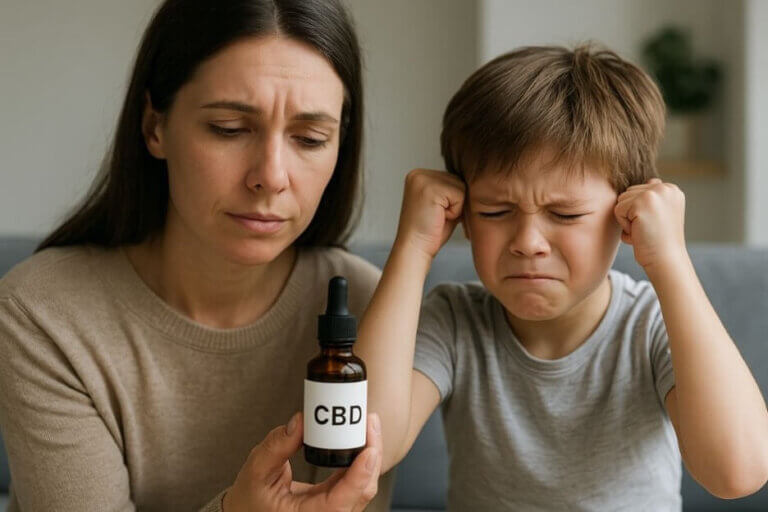
Behind every outburst is a child trying to cope, and scientists are exploring how CBD might help bring balance.
Every parent who’s been through it knows the look, the clenched fists, the trembling lip, the storm behind their child’s eyes before the meltdown hits. You whisper, you wait, you hope it passes. It’s not defiance. It’s a child trying to cope in a world that sometimes feels too loud, too fast, too much.
For families of children with intellectual disabilities, those moments can fill entire days. Love runs deep, but exhaustion runs deeper. And while traditional medications can help, they often come with trade-offs, calm at the cost of personality, peace at the price of spark.
That’s what led a small team of researchers in Australia to ask a quiet but powerful question: Could there be a gentler way to help children find balance? Their attention turned to CBD (cannabidiol), a compound known for calming the body’s stress responses without dulling the mind.
What they found in their pilot study didn’t make headlines, but it offered something families rarely get: a glimpse of calm that doesn’t take anything away.
Science Snapshot
- Participants: 8 children (ages 8–16) with intellectual disability and severe behavioral problems
- Treatment: 98% pure cannabidiol (CBD) oil vs. placebo
- Duration: 8 weeks
- Dose: Up to 20 mg/kg/day (maximum 500 mg twice daily)
- Results: 100% completion rate, no serious side effects, early signs of improvement
A Small Study with a Big Heart
This wasn’t a flashy trial or a quest for miracle headlines; it was a study built on empathy. Dr. Daryl Efron and his team at the Murdoch Children’s Research Institute in Melbourne wanted to know one thing: Could CBD help children with severe behavioral challenges find calm, safely and gently, without changing who they are?
They invited eight children, ages 8 to 16, all living with intellectual disabilities and struggling with intense behavioral outbursts, aggression, frustration, and sometimes self-harm. These were families who had already tried everything else: therapy, structured routines, medication that often left kids sleepy, detached, or dulled.
The researchers split the group in two. Half received a CBD oil made from 98% pure cannabidiol, and the other half got a placebo, a harmless oil that looked and tasted the same. For eight weeks, parents gave the oil twice a day, slowly increasing the dose to match each child’s body weight.
What Happened Next
Every single child finished the study. Parents filled out all the questionnaires, attended every appointment, and followed every dosage instruction. That kind of commitment says a lot not just about the study, but about what it meant to the families involved.
Most importantly, the researchers saw no serious side effects. Parents described the experience as easy, safe, and even encouraging. Several said they noticed small but meaningful changes, calmer moods, fewer meltdowns, and better moments of connection. And perhaps the most powerful finding of all: every parent said they’d recommend the study to others.
Why It Matters
Sometimes the most meaningful developments don’t start in big labs, they begin with small, careful acts of compassion. This pilot study didn’t aim to revolutionize medicine; it aimed to listen. To see if there was room in science for something gentler.
And it found one.
For families who have spent years balancing medications and meltdowns, this research brought something rare: proof that care doesn’t have to come with compromise.
The study showed that CBD could be given safely to children with behavioral challenges, that parents were willing and able to follow every step, and that even subtle improvements could change the rhythm of a household.
No, it wasn’t about erasing difficulty; it was about easing it. About creating moments of calm that let love breathe again.
In a world where most studies measure data, this one measured hope. And that might be the first true step toward reimagining how we care for children who see and feel the world differently.
What This Means for Your Children
For parents and caregivers, this study offers something simple yet powerful: possibility. The kind that doesn’t come wrapped in guarantees, but in gentle progress and genuine curiosity.
Here’s what this small but hopeful step means for families and for the future of care:
- CBD can be explored safely. No serious side effects were reported, showing that CBD can be studied in children with care, structure, and compassion.
- Families matter in the process. Every parent finished the study, a rare and powerful sign that science can feel supportive, not clinical.
- It’s a green light for more research. With safety confirmed, larger studies can now look deeper at how CBD might help ease frustration and emotional overload.
- Calm doesn’t have to mean compromise. The early signs suggest CBD could one day bring peace without dulling the personality and joy that make every child unique.
- Every small step counts. For families who live moment-to-moment, progress doesn’t need to be dramatic, it just needs to be kind.
This study does something just as meaningful: it keeps the conversation going. It tells families they haven’t been forgotten by science, that researchers are still listening, and that the search for a gentler way forward is far from over.
Original Study Details
Study Title: A Pilot Randomised Placebo-Controlled Trial of Cannabidiol to Reduce Severe Behavioural Problems in Children and Adolescents with Intellectual Disability
Date: May 2020
Authors: Daryl Efron, Jeremy L. Freeman, Noel Cranswick, Jonathan M. Payne, Melissa Mulraney, Chidambaram Prakash, Katherine J. Lee, Kaitlyn Taylor, Katrina Williams
Source: British Journal of Clinical Pharmacology

Contributing Expert
Alan first discovered CBD while recovering from a sports injury — and he’s been a believer ever since. Over the years, he’s used CBD for sleep, skincare, easing anxiety, and even helping his family pet stay calm. With more than 20 years of experience running a marketing business, Alan now enjoys sharing scientific studies and personal experience with customers at Flourish + Live Well.