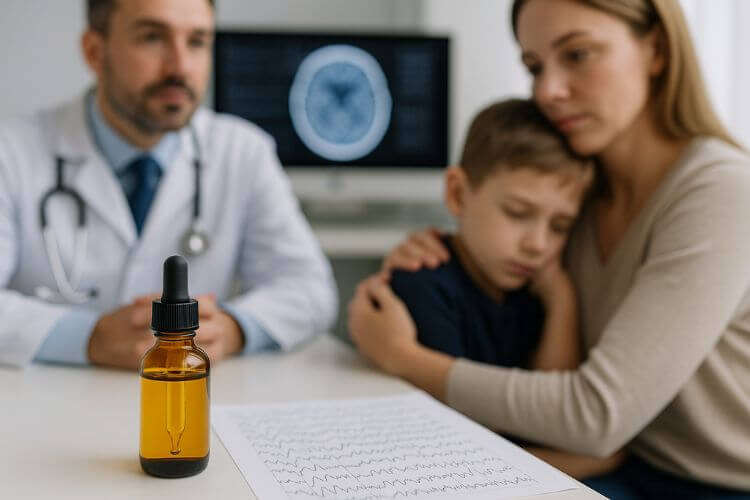
Could cannabidiol help reduce seizures in children where other treatments fall short? The latest science suggests it just might.
Few things are harder than watching your child experience seizures. They can come without warning, disrupt school, friendships, sleep, and leave parents living in constant worry. For many families, epilepsy isn’t just a medical diagnosis; it’s a daily battle.
Traditional medications (anti-seizure drugs) are life-saving, but they don’t always work for everyone. About 1 in 3 children with epilepsy still struggle with uncontrolled seizures even when trying multiple prescriptions. And when seizures persist, quality of life suffers for the entire family.
This is why researchers and desperate parents have been turning their eyes to CBD, or cannabidiol. Safe, non-intoxicating, and carefully studied in recent years, CBD is bringing new hope to families affected by epilepsy.
Why Parents Are Turning to CBD
CBD works with the body’s natural systems that help regulate calm and balance. It doesn’t cause a “high.” It doesn’t alter your child’s thinking, personality, or awareness.
Instead, it gently works in the body, supporting systems related to calmness, balance, and overexcited nerve activity that lead to seizures.
For parents, the most important point is simple: CBD is being recognized not as a replacement for medication, but as a gentle partner therapy that may reduce seizures and improve quality of life.
Why CBD for Epilepsy?
Epilepsy happens when brain cells fire in chaotic bursts, leading to seizures. Most medications try to calm down that overactivity. CBD appears to do something similar, though in its own way:
- It interacts with the endocannabinoid system, a natural network in the body that helps regulate how brain cells communicate.
- It may reduce the over-excitation of neurons.
- It also has anti-inflammatory and antioxidant effects, which could protect brain cells.
Scientists have seen enough promise to test CBD in serious, drug-resistant epilepsies.
What the Research Shows
In clinical trials using pharmaceutical-grade CBD, many children with severe forms of epilepsy experienced meaningful seizure reduction. Here are some key findings:
Some families saw seizure frequency drop by 30% or more. Others noticed better sleep, calmer moods, or improved alertness in school. While results vary, one consistent finding is that CBD is generally well-tolerated and safe when used under medical guidance.
- Proven in rare, severe epilepsies: CBD is effective as an add-on treatment for Dravet syndrome, Lennox–Gastaut syndrome, and tuberous sclerosis complex, three of the most difficult childhood epilepsies.
- Seizure reduction is real: In clinical trials, many children experienced fewer seizures, some by 30–50% or more. While not every child responds, for some families, the difference was life-changing.
- Safety is encouraging: Most children tolerated CBD well. Common side effects included sleepiness, diarrhea, or changes in appetite—but serious risks were rare.
- It’s always an add-on: CBD was tested alongside regular anti-seizure drugs, not instead of them. The goal is support, not replacement.
- Supervision is crucial: Because CBD can interact with certain seizure medications, careful medical monitoring is essential.
In short, CBD isn’t a miracle cure, but it is a well-studied, FDA-approved option for specific severe pediatric epilepsies.
Why This Matters for Your Family
Here’s what makes CBD stand out for parents and caregivers:
- Non-intoxicating → CBD will never make your child feel “high.”
- Well-researched → Approved by the FDA for certain rare epilepsies.
- Add-on therapy → Works alongside current treatments, not in place of them.
- Safe when supervised → Side effects are usually mild, like drowsiness or appetite changes.
- A new level of hope → Even small improvements can mean big changes in family life.
Real Stories, Real Relief
What makes this so powerful isn’t just the numbers; it’s the families behind them.
- Parents describe children who once had dozens of seizures a day now going whole days or weeks without one.
- Teachers report kids staying alert and engaged in class, instead of missing school for hospital visits.
- Families share the relief of watching their child smile, play, or sleep peacefully for the first time in years.
These are not universal outcomes, but they show why hope around CBD is so strong.
How to Explore CBD Safely
If you’re considering CBD for your child:
- Choose quality. Look for pharmaceutical-grade or trusted CBD brands with clear lab testing.
- Work with your doctor. Always let your child’s neurologist know before starting CBD.
- Start low, go slow. Dosage matters and may take time to adjust.
- Be patient. Benefits may take weeks or months to show.
What This Means for Your Family’s Journey
CBD is opening doors of hope that weren’t available just a few years ago. While it’s not a cure, it is a safe, natural, and well-studied option that could make daily life a little brighter and more manageable.
If your family has been searching for another way forward, CBD may be the supportive partner you’ve been waiting for.
Original Study Section
Title: Pharmaceutical-Grade Cannabidiol in Pediatric Epilepsy
Date: June 2025
Authors: Aimee F. Luat; Kayla A. Hetrick
Link to Study: Read on ResearchGate

Contributing Expert
Alan first discovered CBD while recovering from a sports injury — and he’s been a believer ever since. Over the years, he’s used CBD for sleep, skincare, easing anxiety, and even helping his family pet stay calm. With more than 20 years of experience running a marketing business, Alan now enjoys sharing scientific studies and personal experience with customers at Flourish + Live Well.