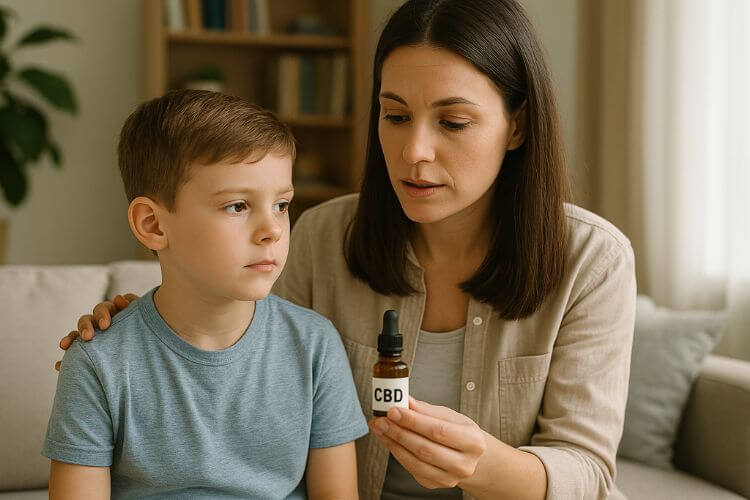
For families who’ve tried everything, could CBD offer new hope? A recent hospital review gives us some answers.
Imagine watching your child go through seizure after seizure, even though they’re already on multiple medications. For parents of children with drug-resistant epilepsy, this isn’t just a nightmare; it’s daily life. You try every treatment available, but nothing seems to bring the relief your child deserves.
That’s why families are turning their attention to CBD. It’s not just about wellness trends anymore; it’s about exploring every possible option when standard medicines fall short.
And now, doctors have shared their real-life experience using CBD with children who faced some of the toughest epilepsy cases.
What the Doctors Did
At a large hospital in Pakistan, Doctors at the pediatric neurology outpatient clinic looked back at children treated with drug-resistant epilepsy.
Here’s what they did:
- They identified 17 children under 18 years old who had DRE.
- The average age was just over 5 years old. Most of the children (15 out of 17) were boys.
- Before CBD, all of the children were already stabilized on multiple antiseizure medications but were still having seizures.
Doctors added CBD as an additional therapy, starting at a low dose of 10 mg per kg per day, then gradually increasing if needed, up to 40 mg/kg/day.
The doctors wanted to see one thing: did seizures improve, and how well did the children tolerate CBD?
The goal wasn’t to replace existing treatments, but to see if CBD could make a measurable difference when everything else had failed.
What Seizures Looked Like Before CBD
To understand the challenge, consider the starting point:
- On average, these children were having nearly 28 seizures every single day.
- Families had already tried multiple medications, yet the seizures continued to dominate daily life.
For a parent, that means sleepless nights, constant monitoring, and never knowing when the next episode might strike. These weren’t occasional flare-ups; they were ongoing, relentless struggles.
What Happened After CBD Was Added
At the 12-week mark, doctors looked at how things had changed. The results were encouraging:
- Improvement in most children: About 70% of the children had fewer seizures after starting CBD.
- Dramatic results for some:
- 7 children reported more than 75% improvement.
- 2 children became completely seizure-free.
- Average reduction: Across the group, seizure frequency dropped by 68% compared to baseline.
- Minimal-responders: About 29% saw minimal benefit, and for them, CBD was discontinued early.
For families who had been living with dozens of seizures each day, even a partial reduction meant a huge shift in quality of life.
What Parents Reported
Anytime a new treatment is tried, parents naturally worry about side effects. In this review, caregivers reported outcomes as they observed them.
- Most side effects were mild: The most common ones were:
- Diarrhea
- Decreased appetite
- Sleepiness or lethargy
- Fever
- 9 patients in total reported side effects: These were considered tolerable, and for most families, the improvements in seizure control outweighed the challenges.
Importantly, no severe or life-threatening side effects were noted.
Why This Matters for Families Around the World
This hospital’s experience adds to the growing body of real-world evidence that CBD may have a role in managing drug-resistant epilepsy. For families who feel like they’ve exhausted every option, even a 50% reduction in seizures can mean fewer hospital visits, more restful nights, and a chance at normalcy.
It also matters because this research comes from a developing country (LMIC) context. Much of the published CBD research comes from Western countries, but epilepsy is a global issue. Documenting results from places like Pakistan helps show how CBD could be integrated into care in diverse healthcare settings.
What Parents Can Take Away
If your child is living with epilepsy that doesn’t respond to regular medications, this study offers three key takeaways:
- CBD may help where other treatments fall short. In this group, more than two-thirds of children saw improvement.
- Some children may see life-changing results. For a few, seizures dropped dramatically or disappeared altogether.
What this means is simple: CBD isn’t a cure-all, but for some families, it may open a door that felt permanently closed.
Original Study Section
Title: Cannabidiol (CBD) in Children with Drug-Resistant Epilepsy: An Initial Experience from a Developing Country
Date: January–March 2023
Authors: Prem Chand; Ammaar Mohammad Ali Abbasi; Asra Wahid; Jai K. Das
Link to Study: Read on Journal of Pediatric Neurosciences

Contributing Expert
Alan first discovered CBD while recovering from a sports injury — and he’s been a believer ever since. Over the years, he’s used CBD for sleep, skincare, easing anxiety, and even helping his family pet stay calm. With more than 20 years of experience running a marketing business, Alan now enjoys sharing scientific studies and personal experience with customers at Flourish + Live Well.