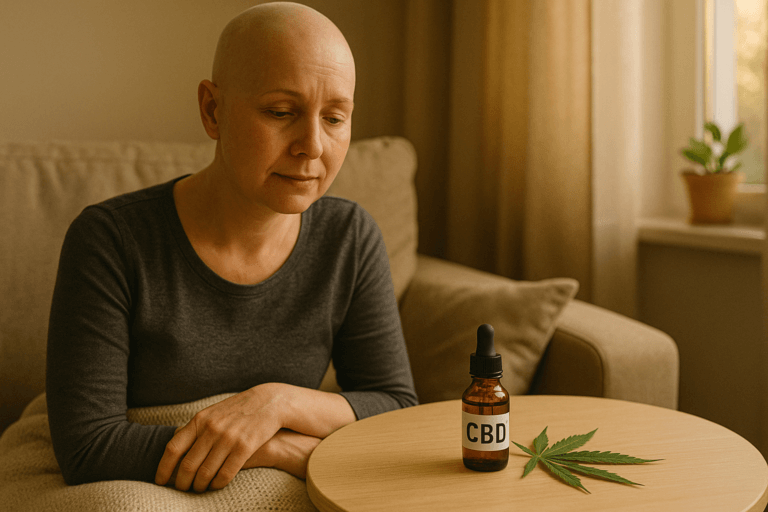
In stressful times, even small comforts matter, and scientists are studying whether CBD can offer more of them.
There’s a moment, sometimes quiet, sometimes loud, when everything you knew about your life changes.
Sleep disappears.
Anxiety moves in.
Pain shows up uninvited.
And suddenly your entire day revolves around managing symptoms that weren’t part of your story just weeks ago.
Cancer doesn’t just attack the body. It steals routines, memories, confidence, and the simple ability to relax.
That’s why more and more people fighting cancer are quietly reaching for CBD. Not because they expect a miracle but because they just want to feel human again.
And now researchers are asking the same question patients have been asking themselves:
Can CBD make the day-to-day experience of cancer feel a little more bearable?
Science Snapshot
The Big Story
CBD is showing potential to help cancer patients feel more comfortable and emotionally balanced.
What Patients Reported
• Less day-to-day discomfort
• Better sleep
• Reduced anxiety
• Lower opioid use
• More satisfaction with treatment
What the Lab Suggests
CBD interacts with pathways that interest cancer researchers, but we’re still early in understanding how.
Why So Many Patients Are Turning to CBD
People aren’t using CBD because it’s trendy. They’re using it because they’re exhausted.
Exhausted from:
- Sleepless nights
- Constant mental pressure
- Post-treatment discomfort
- Emotional spirals that hit without warning
- Medication side effects that make everything feel heavier
CBD entered the conversation because it feels:
- Gentle
- Non-intoxicating
- Non-addictive
- Easy to integrate into daily life
Patients kept saying the same thing in different words:
“I just want something that helps me get through the day.”
And that is exactly why researchers dived deep into years of studies to see what CBD might actually be offering behind the scenes.
What Researchers Found When They Looked at Real Patient Experiences
When you read through the findings of this review, a clear picture starts to form not about cancer treatment, but about quality of life.
Across multiple clinical studies, cancer patients who used CBD reported:
- Feeling more comfortable
- Needing fewer opioids
- Sleeping better
- Feeling less anxious
- Feeling more satisfied with their treatment
- Feeling more in control of their days
Not cured.
Not magically fixed.
But supported.
And for someone living through cancer, support is not small. Support is everything.
The Hidden Side of Cancer Nobody Talks About
When people imagine cancer, they think of medical charts and treatment plans. But the real battle happens in the moments in between:
Trying to fall asleep.
Trying to eat without discomfort.
Trying to stay calm during a whirlwind of appointments.
Trying not to break down when the fear creeps in.
CBD’s potential lies in those “in-between” moments, the ones that determine how you feel emotionally and mentally, long before scans or test results appear.
The review suggests CBD may help soften the emotional noise that comes with cancer.
Not silence it but soften it.
Make space.
Give people room to breathe.
What Surprised Scientists Most About CBD’s Impact on Daily Life
In the lab, CBD showed promising interactions with pathways related to cancer biology but researchers are careful to say this is early work.
The bigger surprise came from human experiences.
Patients weren’t just reporting less discomfort. They were reporting:
- Better overall well-being
- Better sleep rhythms
- Better emotional stability
- Better satisfaction with the treatments they were already receiving
People weren’t using CBD to replace anything. They were using it to get through something.
This led researchers to one key realization:
CBD may not change the disease, but it could change the experience of living with it.
A Moment of Honesty: Cancer Is Not Just a Physical Battle
You can fight a physical illness with medical treatments. But emotional pain? Sleeplessness? Constant mental overload?
Those require a different kind of help, one that doesn’t leave you foggy, drained, or dependent.
That’s why CBD has gained so much attention.
People want comfort without losing themselves.
Relief without tradeoffs.
Calm without sedation.
Science hasn’t answered every question yet, but the review makes one thing clear:
CBD is worth paying attention to.
Why This CBD Review Could Change the Future of Supportive Cancer Care
This review opens the door to a new conversation, one where cancer patients have more options, more control, and more tools to help them feel grounded.
Key discoveries include:
- CBD consistently supported quality-of-life measures
- Patients used fewer opioids when CBD was part of their routine
- Emotional well-being often improved
- Sleep disruptions were reduced in several studies
- Patients felt more satisfied with their care
And this isn’t hype, this is what people reported in real clinical trials.
What This Could Mean for Life During Cancer Treatment
The problem this research is trying to help solve is clear:
Cancer affects more than your body; it affects your entire life.
Here’s what this review means for you or someone you love:
- CBD is being seriously studied, not dismissed or treated like a trend.
- Patients are reporting real improvements in how they feel day-to-day.
- Quality of life matters, and CBD may help support that.
- You deserve comfort, not just treatment.
- You deserve calm, not just survival.
- You deserve options, not limitations.
- CBD may give you more control during a time when control feels impossible.
And if CBD can make even one day feel a little lighter, a little calmer, a little more you, that’s worth paying attention to.
Original Study Section
Title: Role of Cannabidiol for Improvement of the Quality of Life in Cancer Patients: Potential and Challenges
Date: October 2022
Authors: Ryan Green, Roukiah Khalil, Shyam S. Mohapatra, Subhra Mohapatra
Link to Study:https://www.mdpi.com/1422-0067/23/21/12956
Contributing Expert
Alan first discovered CBD while recovering from a sports injury — and he’s been a believer ever since. Over the years, he’s used CBD for sleep, skincare, easing anxiety, and even helping his family pet stay calm. With more than 20 years of experience running a marketing business, Alan now enjoys sharing scientific studies and personal experience with customers at Flourish + Live Well.