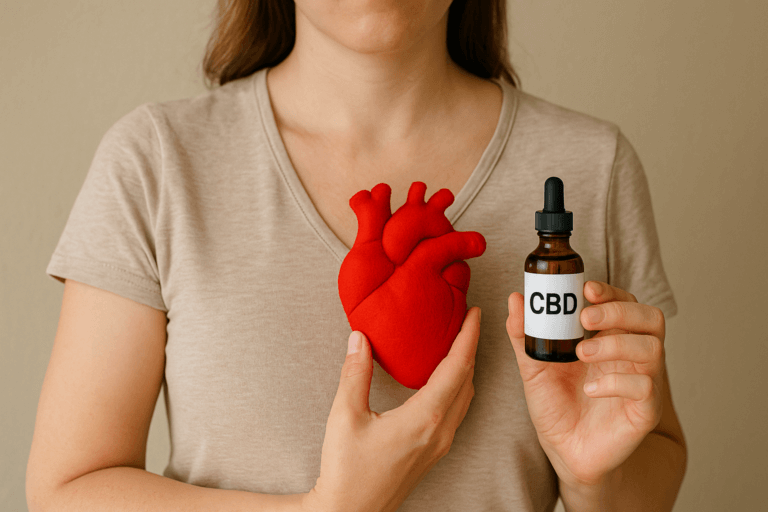
With stress and inflammation pushing heart health to its limits, CBD could offer subtle support.
Every heartbeat keeps you alive, but most people don’t think about their heart until something goes wrong.
A scare.
A warning sign.
A diagnosis no one ever wants to hear.
Heart issues don’t just affect your body; they affect your confidence, your energy, and your peace of mind. You start noticing every flutter, every tight breath, every stressful moment that sends your pulse climbing.
That’s why this new scientific review is so compelling:
Researchers are discovering that CBD may influence several underlying factors linked to cardiovascular stress.
Not as a treatment.
Not as a replacement for medication.
But as a potential supportive tool that works behind the scenes.
And the way CBD interacts with the body is more sophisticated and more promising than most people realize.
Science Snapshot
What this review explored
CBD’s potential influence on cardiovascular inflammation, oxidative stress, vascular health, and blood pressure.
Key takeaways
- Anti-inflammatory support
- Antioxidant effects
- Vasoprotective potential
- Immune modulation
- Possible blood pressure influence
Why it matters
These factors play a huge role in long-term heart health, and CBD may support them.
What’s next
Larger human trials, better dosing standards, and long-term safety studies.
The Surprising Connection Between CBD and Your Heart’s Stress Response
Your heart doesn’t just react to physical demands. It responds to inflammation, oxidative stress, emotional tension, and even tiny imbalances in your blood vessels.
Scientists are now piecing together evidence that CBD may:
- Support calmer vascular function
- Reduce oxidative stress
- Influence inflammation
- Help maintain endothelial (blood vessel) integrity
- Gently affect blood pressure responses
- Interact with cardiovascular-related peptides
These aren’t small things. These are the silent forces that affect your heart over time, long before symptoms show up.
Researchers want to know if CBD can help support balance in these systems.
Why the Body Has Built-In Receptors That Respond to CBD
One of the most fascinating discoveries in this review is how the cardiovascular system interacts with the endocannabinoid system (ECS).
Your body has cannabinoid receptors, CB1 and CB2, throughout the heart, blood vessels, and immune cells.
These receptors help influence:
- Inflammation
- Vascular tone
- Immune response
- Oxidative balance
- Stress signals
- Blood pressure
CBD interacts with these receptors in ways that may encourage a more stable, less stressed environment inside the body.
Here’s the big difference:
CB1 effects can be linked to unwanted psychoactive responses. CB2 effects are linked to protective, anti-inflammatory actions, without those unwanted sensations.
And CBD appears to influence CB2 pathways much more selectively, which is excellent news for cardiovascular research.
What Researchers Saw in Early Studies And Why It’s Getting Attention
Across dozens of preclinical and early human studies, CBD showed encouraging signs of supporting heart health:
1. Anti-Inflammatory Support
Chronic inflammation plays a massive role in cardiovascular disease. CBD demonstrated the ability to help reduce several inflammatory pathways, a positive sign for researchers.
2. Antioxidant Effects
Oxidative stress damages blood vessels and accelerates cardiovascular aging. CBD showed signs of reducing oxidative markers in multiple models.
3. Vasoprotective Potential
Healthy blood vessels are flexible. Stressed ones stiffen. CBD may help support better vascular tone and function.
4. Possible Blood Pressure Influence
Some early human studies found mild decreases in blood pressure after CBD use, especially under stress.
5. Reduced Stress-Related Peptides
CBD lowered levels of certain peptides associated with the body’s stress and “fight-or-flight” responses.
6. Smaller Infarct Size in Some Models
In ischemia–reperfusion models (used to simulate heart attack conditions), CBD appeared to reduce tissue damage.
7. Immune Modulation
The immune system plays a major role in vascular health. CBD may help promote a more balanced immune response.
Now, these findings don’t mean CBD prevents heart disease. They do suggest CBD may support some of the most important factors that keep the cardiovascular system functioning smoothly.
The Part of CBD Research No One Expected
The review highlights something surprisingly powerful:
CBD works on dozens of molecular targets, not just cannabinoid receptors.
CBD interacts with:
- Redox-sensitive transcription factors
- Vascular muscle cells
- Immune cells
- Enzymes tied to oxidative balance
- Endothelial function pathways
This gives CBD a multi-layered effect, the kind researchers are paying close attention to.
They aren’t claiming CBD fixes cardiovascular problems. Instead, they’re exploring whether CBD helps the body support itself during stress, inflammation, and vascular strain.
And that approach could change the future of cardiovascular wellness.
What Researchers Still Need to Understand
Even with the promising signs, the review is honest about the gaps:
- CBD’s bioavailability is unpredictable
- Most human studies are small
- Study durations are short
- Long-term cardiovascular safety isn’t known
- Ideal dosing hasn’t been established
- Receptor-targeting needs refinement
These aren’t dealbreakers; they’re roadmaps for future research.
Scientists aren’t dismissing CBD. They’re asking for more evidence because what they’re seeing so far looks worth exploring.
What This Could Mean for Your Heart
The problem this research is trying to solve is enormous:
Heart disease affects millions of people, often silently, long before symptoms show up.
Here’s what this review means for your everyday life:
- CBD may support a calmer cardiovascular environment during stress
- It may help reduce inflammation, one of the biggest drivers of heart strain
- Its antioxidant properties may help protect blood vessels
- It may gently influence blood pressure, especially during stressful moments
- It may help keep the endothelial lining healthier, supporting smoother blood flow
- It’s being seriously studied, not dismissed
CBD is not a heart medication. But the review shows CBD may offer supportive benefits that align with what your heart needs most: balance, reduced stress, and protection from harmful oxidative pressure.
If future research confirms these findings, CBD could become a valuable complementary tool in cardiovascular wellness.
And even now, this research makes one thing clear:
Your heart deserves every possible source of support, and CBD might be one more piece of that puzzle.
Original Study Section
Title: Cardiovascular Effects of Cannabidiol: From Molecular Mechanisms to Clinical Implementation
Date: October 2025
Authors: Hrvoje Urlić, Marko Kumrić, Nikola Pavlović, Goran Dujić, Željko Dujić, Joško Božić
Link to Study: https://www.mdpi.com/1422-0067/26/19/9610

Contributing Expert
Alan first discovered CBD while recovering from a sports injury — and he’s been a believer ever since. Over the years, he’s used CBD for sleep, skincare, easing anxiety, and even helping his family pet stay calm. With more than 20 years of experience running a marketing business, Alan now enjoys sharing scientific studies and personal experience with customers at Flourish + Live Well.