How Real People Actually Use It (Not Just Lab Volunteers)
If you’ve ever tried to figure out how much CBD to take, you’ve probably seen everything from 10 mg gummies to 1500 mg bottles and felt totally lost. Most people end up guessing—and then wondering if they took too little, too much, or just wasted their money.
In this article, we’ll look at a large survey of real CBD users and what they actually take day to day, how they use it, and what they report about benefits and side effects. Then we’ll talk about how to use that information as a starting point for building your own CBD routine, without turning it into medical advice.
What this new survey looked at
A 2024 study published in Frontiers in Psychiatry collected detailed online survey responses from adults who were already using CBD or cannabinoid‑dominant products. The goal was to understand how people are using CBD in the real world, what doses they choose, what they take it for, and what side effects they notice.
Participants answered questions about:
- Their main reasons for using CBD.
- The form they used (oils, capsules, edibles, etc.).
- How many milligrams did they usually take per day?
- Whether they felt CBD was effective for them.
- Any side effects they experienced.
This kind of survey can’t prove cause and effect, but it gives a helpful snapshot of what real people are actually doing outside a lab.
The doses most people actually take
One of the most useful findings was how much CBD people said they used on an average day. Instead of mega‑doses, most users fell into fairly modest ranges:
- The most common daily dose range was 0–24 mg per day.
- The next most common range was 25–49 mg per day, followed by 50–99 mg per day.
- Only a smaller group reported using 100 mg per day or more.
This is very different from many clinical trials, where a single dose might be 300–600 mg of CBD for a specific test, such as anxiety in a controlled setting. In the real world, most people seem to prefer lower daily amounts that they can take consistently.
Why people said they were using CBD
The survey also asked users why they chose CBD in the first place. Some of the most common reasons included:
- Managing anxiety or stress‑related symptoms.
- Supporting sleep and nighttime relaxation.
- Easing pain or physical discomfort.
- Supporting overall well-being or mood.
Again, this is self‑reported information, not a controlled trial. It tells us what people are aiming for, not what CBD is proven to treat.
What people reported about effectiveness
Most respondents in this study felt CBD was at least somewhat helpful for the reason they were using it, especially for anxiety‑type symptoms and sleep problems. Many reported improved mood, less perceived stress, and better rest, although the exact degree of benefit varied widely from person to person.
The authors stressed that these are perceptions, not clinical diagnoses, and that the study can’t confirm CBD as a treatment for any condition. Still, it shows that many users are finding enough benefit to keep CBD in their regular routine.
Side effects: what users actually notice
When it came to side effects, most people reported mild and manageable issues, if any at all. The most common ones included:
- Tiredness or sleepiness, especially at higher doses.
- Dry mouth.
- Changes in appetite.
Serious side effects were uncommon in the survey, but the study authors reminded readers that CBD can interact with other medications and that many clinical trials still recommend liver function monitoring when using high doses.
Why research doses and real‑world doses look so different
If you’ve read about CBD studies showing effects on anxiety or sleep, you might have noticed that researchers often use hundreds of milligrams in a single dose. In contrast, this real‑world survey shows most users taking under 50 mg per day.
There are a few reasons for that gap:
- Research needs clear signals. Clinical studies sometimes use higher doses to increase the chance of detecting a measurable effect over a short period.
- Real people think about cost. Higher doses can be expensive, so many users choose lower daily amounts they can afford long-term.
- Sensitivity varies. Some people feel noticeable effects at relatively low doses, especially if they are new to CBD.
This doesn’t mean high doses are “better” or that low doses are “useless.” It simply shows that, outside of a lab, many people settle into lower ranges that still feel meaningful to them.
Using this information to plan your own CBD routine
Nothing in this article should replace advice from your doctor, especially if you have a medical condition or take prescription medications. That said, the survey results line up with a few practical principles many clinicians already suggest:
- Start low and go slow. Many users begin in the 10–25 mg per day range and adjust gradually, checking how they feel over several days.
- Increase in small steps. Instead of jumping from 10 mg to 100 mg, people often make smaller increases and give each change time to settle.
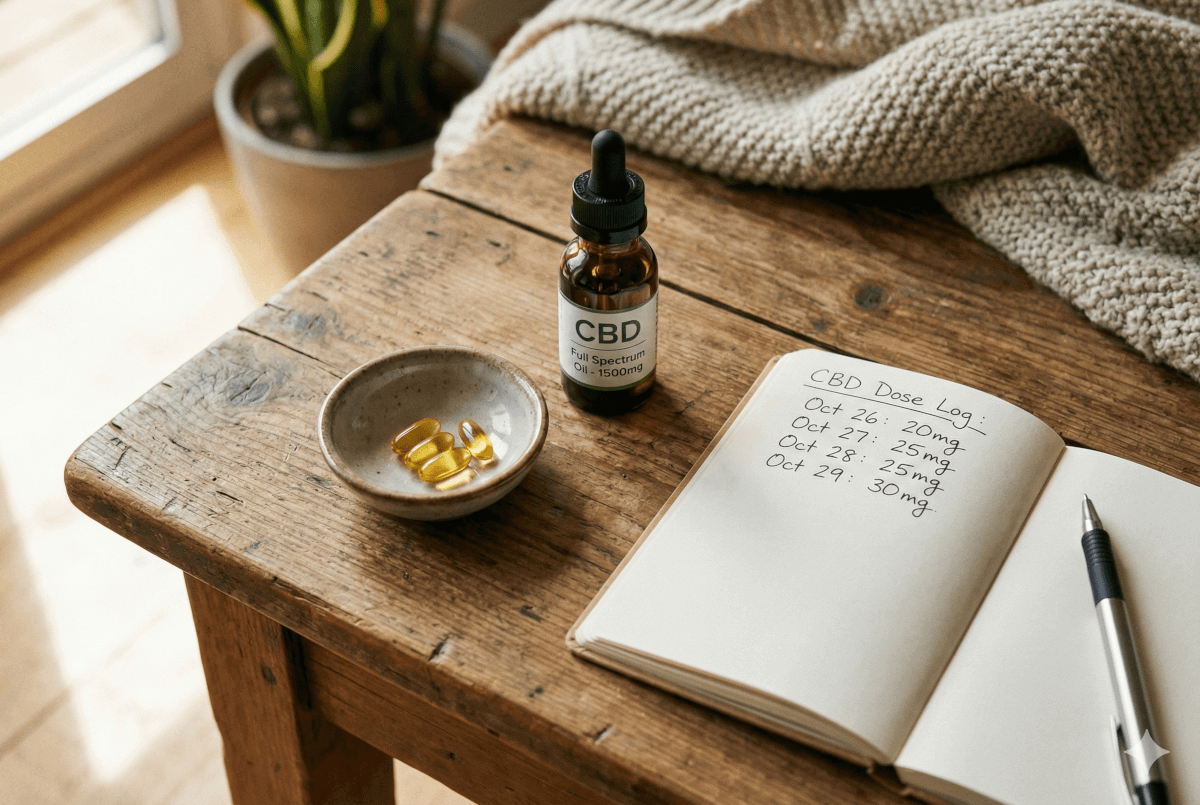
- Keep a simple journal. Tracking dose, timing, and how you feel can help you find your personal “sweet spot” faster and avoid wasting product.
- Talk with a professional. Because CBD can interact with other drugs, especially those processed by the liver, it’s smart to loop in a healthcare provider before making big changes.
The main takeaway: you don’t have to match research‑study doses to have a thoughtful CBD routine. You can learn from what real users do, start low, move carefully, and build a plan that fits your body and your budget.
Original study
- Title: “Cannabidiol usage, efficacy, and side effects”
- Authors: Alicja Anna Binkowska, Natalia Jakubowska, Anna Redeł, Sandra Laskowska, Stanisław Szlufik, Aneta Brzezicka
- Year: 2024.
- Journal: Frontiers in Psychiatry.
- Author information: Author bios and affiliations are linked in the article header.
- Links:
- NIH/PMC full text: https://pmc.ncbi.nlm.nih.gov/articles/PMC10938386/[3]
- Frontiers journal page: https://www.frontiersin.org/articles/10.3389/fpsyt.2024.1356009/full

Contributing Expert
Alan first discovered CBD while recovering from a sports injury — and he’s been an advocate ever since. Over the years, he’s used CBD for sleep, skincare, easing anxiety, and even helping his family pet stay calm. With more than 20 years of experience running a marketing business, Alan now enjoys sharing scientific studies and personal experience with customers at Flourish + Live Well.