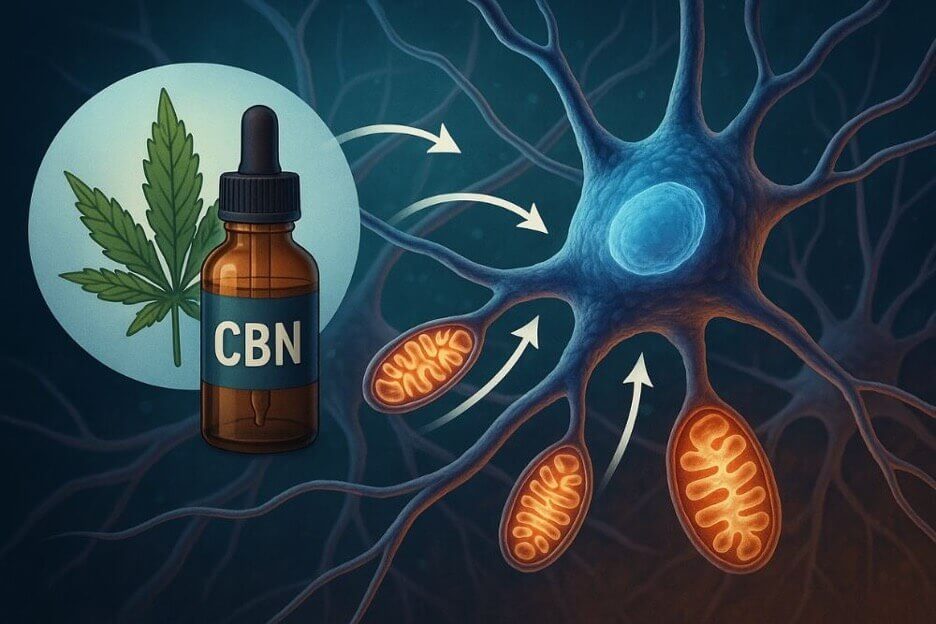
Scientists uncovered how a plant-derived molecule may help the brain’s energy engines fight back against Parkinson’s-related damage.
Think of your brain as a city that never sleeps, millions of tiny lights flickering on and off, each one powered by microscopic “batteries” called mitochondria.
Now imagine those batteries starting to fail, one by one. The city dims. That’s what happens in Parkinson’s disease, where brain cells lose their energy and begin to die.
But here’s the twist: scientists recently found that a compound from CBD-based plants might help those cells fight back.
In a lab study, this gentle molecule, cannabinol (CBN), helped neurons protect and repair their energy engines, offering a glimpse into how nature’s chemistry could support brain resilience.
Science Snapshot
- Focus: Parkinson’s-related mitochondrial damage
- Compound Studied: Cannabinol (CBN), a non-intoxicating molecule from CBD-based plants
- Key Effect: Balanced the brain’s cleanup system (mitophagy) and restored mitochondrial health
- Outcome: Cells treated with CBN survived better under stress
The Search for a Spark
When the researchers started this project, they weren’t looking for a miracle cure; they were looking for a spark. Something that might help tired, struggling brain cells keep their lights on.
Their focus landed on cannabinol (CBN), a quiet member of the CBD family found in plant-based sources. It has shown signs of helping cells manage stress and inflammation.
Could it also protect the brain’s power supply?
A Tiny Lab, a Big Idea
To find out, the team recreated Parkinson’s-like conditions inside a lab dish. They used human nerve cells, the kind that normally carry signals across the brain, and exposed them to a chemical toxin known to mimic the damage caused by Parkinson’s disease. The toxin shuts down the mitochondria, leaving the cells gasping for energy.
Then, they added a twist: before giving the toxin, some cells were pre-treated with CBN. The goal? To see whether this plant-based molecule could help neurons defend themselves when the pressure hits.
What Happened Next Surprised Them
The cells that got CBN fought back. They stayed stronger, showed fewer signs of stress, and their mitochondria, those tiny energy engines, stayed online longer. When the scientists looked deeper into the genes that control these energy systems, they found that CBN had reset the balance.
In damaged cells, the cleanup process that removes broken mitochondria (called mitophagy) was out of control, sweeping away too much. But CBN seemed to calm things down, helping cells recycle just enough to stay healthy.
Why This Matters Beyond the Lab
This experiment didn’t happen in a human brain; it happened under a microscope. But what it uncovered is powerful: a CBD-based plant compound that helped nerve cells maintain their rhythm under pressure.
It’s early evidence that natural molecules like CBN might one day be part of how we defend the brain against the energy collapse that defines neurodegenerative diseases like Parkinson’s.
What This Means for You
Parkinson’s disease doesn’t start with tremors — it starts quietly, deep inside the brain, when neurons lose the energy they need to survive. That’s the problem this research tried to understand: can a CBD-based plant compound help protect the brain’s power supply before it fails? The answer in the lab is promising.
Here’s what you can take away:
- It’s about energy, not just relaxation. Compounds like CBN may help cells maintain their internal power supply.
- Balance is key. By regulating mitophagy — the cleanup of damaged mitochondria — CBN helped cells stay stable.
- There’s more to CBD than you think. This study highlights the growing potential of lesser-known molecules from CBD-based plants.
- Early, but exciting. The findings come from lab experiments, not human trials — yet they point toward new directions for future brain-protective research.
For now, the study reminds us that protecting brain health isn’t just about medicine; it’s also about curiosity, patience, and exploring how plant-based science might someday help us stay sharper for longer.
Original Study Details
Study Title: Transcriptome Highlights Cannabinol Modulation of Mitophagy in a Parkinson’s Disease In Vitro Model
Date: July 2023
Authors:Agnese Gugliandolo; Santino Blando; Stefano Salamone; Federica Pollastro; Emanuela Mazzon; Simone D’Angiolini
Original Source: MDPI Biomolecules Journal

Contributing Expert
Alan first discovered CBD while recovering from a sports injury, and he has been an advocate ever since. Over the years, he’s used CBD for sleep, skincare, easing anxiety, and even helping his family pet stay calm. With more than 20 years of experience running a marketing business, Alan now enjoys sharing scientific studies and personal experience with customers at Flourish + Live Well.