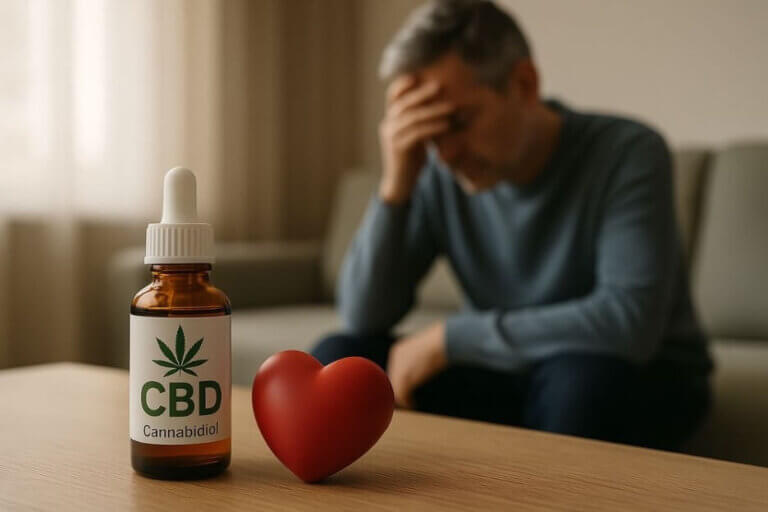
CBD may hold the key to shielding the brain from damage during heart attacks, offering new hope for life after cardiac emergencies.
When the heart stops, time becomes the enemy. Each second without oxygen pushes the brain closer to disaster, neurons begin to die, and with them, memories, movement, and parts of who we are. For survivors of cardiac arrest, the greatest threat often isn’t the heart itself, but the silent wave of brain injury that follows.
Now imagine if a single compound could help protect the brain in those critical moments, not a high-tech device or a new synthetic drug, but cannabidiol (CBD), a molecule better known for calming anxiety and easing pain.
In a recent study, researchers found that CBD might do something extraordinary: shield the brain from damage after cardiac trauma, and even help nerve cells begin to heal.
It’s a compelling look at how this familiar natural compound could one day find a place in emergency medicine’s most urgent moments, the fight to save not just life, but the mind that lives within it.
Science Snapshot
- Focus: CBD’s ability to protect the brain after cardiac ischemia-reperfusion injury
- Model: Rat model simulating heart attack and blood flow restoration
- Groups: Control, I/R, I/R + Prophylactic CBD, I/R + Therapeutic CBD
- Results: CBD reduced inflammation, oxidative stress, and neuron death
- Mechanisms: Antioxidant, anti-inflammatory, and anti-apoptotic pathways (AMPK, PGC-1α, SIRT1, Bcl-2, Bax)
When the Heart Falters, the Brain Pays the Price
Imagine surviving a heart attack, your heart stabilizes, your pulse returns, but something feels off. Your memory slips. Your thoughts feel foggy. That’s not just stress; it’s a brain injury caused by the heart’s crisis.
When blood flow stops and then suddenly returns, the brain is hit by a wave of inflammation and oxidative stress. Neurons, the brain’s messengers, begin to die, even after the heart has been saved.
This hidden damage, called ischemia-reperfusion (I/R) injury, has puzzled doctors for years. We’ve learned how to restart a heart, but protecting the brain that depends on it? That’s still an unsolved mystery.
Where CBD Comes In
That’s where researchers in Turkey saw an opportunity. They wondered if cannabidiol (CBD), a compound known for calming inflammation and protecting cells, could help the brain survive when the heart struggles.
To test it, they created a controlled heart injury model in rats mimicking what happens during a heart attack and recovery. The animals were divided into four groups:
- A healthy control group,
- A group that experienced the simulated heart attack,
- A group given CBD before the heart injury (to test prevention), and
- A group given CBD after the injury (to test treatment).
Then, the researchers studied the rats’ brains not just under a microscope, but at the molecular level tracking inflammation, stress responses, and the genes responsible for cell survival.
What They Found Was Remarkable
The difference between the untreated and CBD-treated groups was night and day. In the injury-only group, neurons were degenerating rapidly, and inflammation markers like TNF-α and caspase-3 spiked.
The brain’s balance between oxidants and antioxidants collapsed like a fire spreading with no one to put it out.
But in the CBD-treated groups, that fire seemed to fade.
- Fewer neurons died.
- Inflammation markers dropped.
- Antioxidant defenses kicked in.
- Key survival genes returned to healthy levels, while pro-death genes quieted down.
In other words, CBD didn’t just soothe inflammation; it helped the brain fight back.
A Glimpse of What’s Possible
Whether given before or after the heart injury, CBD appeared to shield the brain from the worst damage. That dual effect, prevention and recovery, is what makes these findings so exciting.
If similar effects hold true in humans, CBD could one day become part of emergency care for heart attack survivors, not just saving lives, but protecting who we are inside.
What This Means for You
The question this research set out to explore was simple: Can CBD help protect the brain when the heart is under attack?
And the early answer is a hopeful yes.
Here’s what that could mean for you in the bigger picture:
- CBD shows real promise as a brain protector. Its anti-inflammatory and antioxidant effects could one day reduce the neurological fallout from cardiac events.
- Timing matters. Whether given before or after a heart injury, CBD helped reduce cell death, hinting at both preventive and therapeutic potential.
- Neuroprotection goes beyond the brain. Protecting the mind after heart trauma could transform how we think about post-heart-attack care.
- This is about life after survival. It’s not just about keeping the heart alive, it’s about keeping the person intact.
Original Study Details
Study Title: Investigation of Neuroprotective and Therapeutic Effects of Cannabidiol in an Acute Coronary Syndrome Model
Date: March 2024
Authors: M. Doğan Ünlü, D. Uysal, N.F. Karakuyu, S. Asci, O. Ozmen, M.Y. Tepebaşi
Source: PubMed – National Library of Medicine
Contributing Expert
Alan first discovered CBD while recovering from a sports injury — and he’s been a believer ever since. Over the years, he’s used CBD for sleep, skincare, easing anxiety, and even helping his family pet stay calm. With more than 20 years of experience running a marketing business, Alan now enjoys sharing scientific studies and personal experience with customers at Flourish + Live Well.