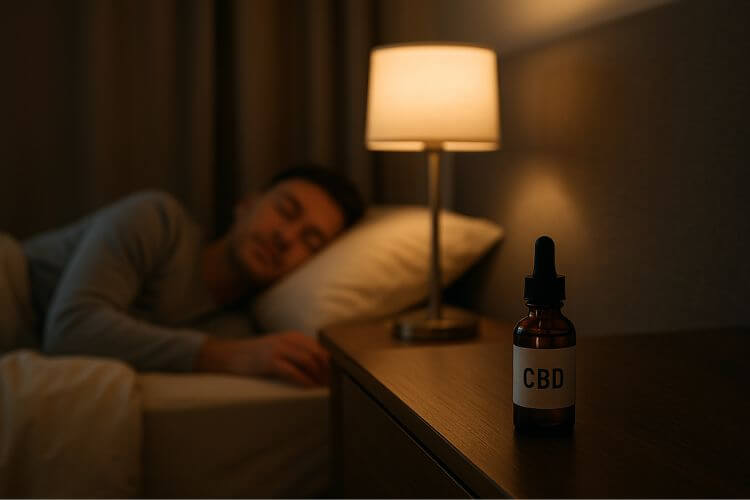
Struggling with racing thoughts or restless sleep? Here’s how cannabidiol could help you find balance.
Lying in bed with your mind running in circles. Waking up already tense before the day even begins. Feeling on edge in situations that shouldn’t make you nervous at all. If this sounds familiar, you’re far from alone. Anxiety and sleep problems often travel hand-in-hand, affecting millions of people every day.
For years, many have searched for natural options that offer relief without leaving them foggy or dependent. That’s where CBD, short for cannabidiol, has entered the conversation.
And if your first question is “Will this make me high?” the answer is clear: no, it won’t. CBD is a natural compound that does not cause intoxication. Its appeal lies in its potential to bring calm and balance while keeping your mind clear..
Why People Are Exploring CBD
CBD is being looked at as a way to address two of today’s most common struggles: stress and sleep. It interacts with the body’s endocannabinoid system (ECS), a network of receptors that plays a role in regulating mood, sleep, inflammation, and how we respond to stress.
When the ECS is thrown off balance, something that can happen from daily pressures, poor sleep habits, or underlying health conditions, our ability to cope with anxiety or drift off to rest can suffer. Cannabidiol seems to encourage this system back toward stability.
CBD does not cause intoxication. Instead, it appears to subtly influence serotonin signaling, calm brain inflammation, and regulate the body’s stress hormones.
This may help explain why many people report feeling calmer during the day and more settled at night with consistent use. Still, personal experiences are only one side of the story; scientific data provides a clearer picture.
A Look at Real Patients: The Study That Stood Out
In one of the largest clinical case series on the topic, researchers reviewed the charts of patients receiving CBD for anxiety and sleep issues. A total of 72 adults were followed across several months as they integrated cannabidiol into their daily routines.
- Doses: Most started with 25 mg of CBD per day, though some required more (up to 175 mg).
- Conditions: Nearly 80% reported anxiety as their primary concern, while others were struggling mainly with insomnia.
- Tracking Progress: Doctors measured results using the Hamilton Anxiety Rating Scale (HAM-A) and the Pittsburgh Sleep Quality Index (PSQI), two established tools in mental health research.
The results were promising:
- Anxiety Relief: Within the first month, 79% of patients reported decreased anxiety. Even better, these improvements often continued throughout the study period.
- Better Sleep: 66% said their sleep improved after the first month. While sleep scores tended to fluctuate more than anxiety scores, many participants continued to notice meaningful improvements over time.
- Side Effects: CBD was generally well-tolerated. A handful of patients reported fatigue or sedation, and only one experienced unusual behavior that resolved after stopping CBD.
Why Anxiety Responded Better Than Sleep
One striking detail from the study was the difference between anxiety and sleep outcomes. Anxiety scores improved steadily and stayed that way for most patients. Sleep scores, on the other hand, rose in the first month but dipped and rose again in later months.
Why? Researchers believe the answer lies in complexity. Anxiety often has a direct connection to brain signaling, particularly serotonin and stress hormones like cortisol, both of which CBD appears to influence.
Sleep, however, depends on many more factors: bedtime routines, light exposure, caffeine, stress levels, and even how much exercise you get. CBD may help set the stage for better sleep, but lifestyle still plays a huge role in whether restful nights become consistent.
How CBD Fits Into Your Daily Routine
If you’re considering CBD for anxiety or sleep, here are some things to keep in mind:
- Start low and go slow: Many people in the study began with 25 mg daily. This modest dose was often enough to create noticeable changes. It’s wise to begin small, then adjust based on how your body responds.
- Timing matters: For daytime anxiety, morning doses may be most effective. For sleep issues, evening use could make more sense. Some people split their dose between morning and night.
- Consistency counts: Just like you wouldn’t expect one workout to transform your fitness, one dose of CBD won’t fix everything. The patients who saw lasting results took it consistently over weeks and months.
- It’s not one-size-fits-all: While some people feel results quickly, others may need to adjust the dose or use CBD alongside other strategies like therapy, meditation, or better sleep hygiene.
What This Means for Your Fight Against Anxiety and Sleepless Nights
For people weighed down by constant worry, CBD may offer something powerful: a chance to feel calmer without feeling altered. Imagine stepping into a stressful meeting without the usual knot in your stomach, or winding down at night without endless tossing and turning.
That doesn’t mean CBD is a magic bullet. For sleep, especially, it’s most effective when combined with good habits, turning off screens, limiting caffeine, and creating a bedtime routine that signals your body it’s time to rest. Think of CBD as a partner in your wellness plan.
The real-world takeaway? CBD offers meaningful support for reducing anxiety and promoting better sleep. Many people find it to be a safe, well-tolerated option that helps them feel calmer and more rested without any risk of intoxication.
Original Study Section
Title: Cannabidiol in Anxiety and Sleep: A Large Case Series
Date: January 2019
Authors: Scott Shannon; Nicole Lewis; Heather Lee; Shannon Hughes
Link to Study: Read the full study on PubMed Central

Contributing Expert
Alan first discovered CBD while recovering from a sports injury — and he’s been a believer ever since. Over the years, he’s used CBD for sleep, skincare, easing anxiety, and even helping his family pet stay calm. With more than 20 years of experience running a marketing business, Alan now enjoys sharing scientific studies and personal experience with customers at Flourish + Live Well.