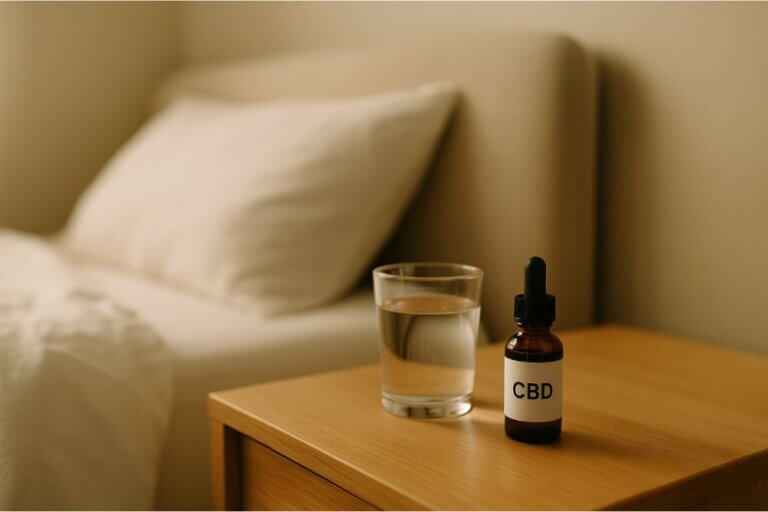
The CAN-REST trial shows that low-dose CBD can safely support relaxation, balance, and gradual sleep improvement.
It’s a familiar scene: the lights are off, the room is quiet, and your mind is anything but. Thoughts loop, worries replay, and before you know it, another hour has slipped away. For many, that pattern of sleepless nights becomes part of life until something changes.
That “something,” for a growing number of people, has been CBD.
Known for its ability to promote calm and balance, CBD has found its way into bedtime routines around the world. But in a field where hype can outpace science, researchers in Australia decided to take a closer, more careful look. Their mission is to explore the effects of CBD on sleep and its safety.
A Study That Met People Where They Actually Sleep
This wasn’t a tiny lab experiment. It was part of a national effort known as the CAN-REST trial, designed to bring science closer to everyday experience.
Researchers from the University of Sydney and leading sleep institutes across Australia recruited over 200 adults between 19 and 65 who struggled with insomnia. The goal was simple but meaningful: test whether daily low doses of CBD could ease insomnia symptoms and improve overall rest.
Each participant was randomly assigned to receive either 50 mg or 100 mg of CBD or a placebo, taken as an oral capsule for eight weeks. No hospital stays, no sleep labs, everything happened at home. The team mailed participants their capsules and sleep-tracking devices, and data was collected online through digital questionnaires.
That’s what made this study so special: it reflected the real-world experience of people using CBD for better sleep at home.
The Calm Came Without Consequences
From start to finish, the results pointed to one clear truth: CBD is remarkably safe.
Across hundreds of participants, no serious side effects were reported. A few experienced mild issues like vivid dreams or grogginess, but these were short-lived and well within what’s considered normal for supplements that influence sleep cycles.
Researchers noted that CBD was well-tolerated even with consistent daily use for eight weeks. That’s an important finding, because safety is always the first question people ask before adding something new to their wellness routine.
And while the study didn’t show a statistically significant difference in sleep scores compared to placebo at these lower doses, what mattered most was the absence of harm and the steady, calm experience people described.
It confirmed what many CBD users already know: sometimes, the benefits build gradually and work best when part of a larger routine of relaxation.
CBD Isn’t a Knockout Pill; It’s a Reset Button
It’s easy to assume that better sleep means stronger sedatives. But true rest doesn’t come from being knocked out; it comes from restoring balance.
That’s where CBD shines.
CBD interacts with the body’s endocannabinoid system, a network that helps regulate mood, stress, and sleep cycles.
When that system is off, maybe because of stress, too much caffeine, or endless scrolling before bed, your body forgets how to switch off.
CBD helps bring that system back to equilibrium.
Instead of forcing your brain to shut down, it helps your body remember what calm feels like.
That’s why users often describe it as “centering” or “grounding” rather than “sleepy.” It sets the stage for rest by lowering the noise inside your head, and sometimes, that’s exactly what your body needs most.
Why This Quiet Study Made Big Waves
For regulators, researchers, and everyday consumers, this study was a big step forward. Australia’s health authority, the Therapeutic Goods Administration (TGA), has been exploring ways to make CBD more accessible as an over-the-counter wellness option provided it’s proven safe and effective.
The CAN-REST trial offers exactly that foundation. It reassures both consumers and health professionals that low-dose CBD can be used safely without risk of intoxication or dependency.
It also highlights something important about sleep itself: improvement isn’t always about instant transformation. Sometimes, it’s about subtle, cumulative changes, calmer nights, quieter thoughts, and better mornings that unfold over time.
The Art of Building a Calmer Bedtime
Picture your ideal bedtime ritual. Maybe it’s herbal tea and soft music, or a book that helps your mind slow down. Maybe it’s dim lighting and a few deep breaths before slipping under the covers.
CBD fits right into that picture, not as a magic pill, but as a gentle signal to your body that the day is done.
Unlike melatonin, which tells your brain to fall asleep, CBD works behind the scenes to help your nervous system settle into balance. Over time, that calm ripples outward from slower thoughts to steadier breathing to longer, deeper sleep.
So even if the effects aren’t immediate, the shift is happening quietly. Every calm evening lays the groundwork for the night that finally feels effortless.
What This Means for You
If you’re considering adding CBD to your nighttime routine, the CAN-REST study offers clear guidance and peace of mind.
Here’s what the science and real-world experience suggest:
- Stay consistent. CBD isn’t a one-night fix. Its benefits build with regular use, just like meditation or exercise.
- Start low and steady. The study’s 50–100 mg range is a great baseline. Your body will tell you what works best.
- Choose quality. Look for third-party lab results, transparent labeling, and products free from additives.
- Create calm rituals. Combine CBD with simple bedtime cues, a warm bath, journaling, and soft lighting. They reinforce one another.
- Be patient. Good sleep takes time. CBD helps you build the foundation, one night at a time.
Because sometimes, the biggest change isn’t falling asleep faster, it’s feeling at peace while you wait.
Original Study Section
Title: The CANnabidiol Use for RElief of Short-Term Insomnia (CAN-REST): A Randomised Placebo-Controlled Clinical Trial
Date: 2024
Authors: Camilla Hoyos, Nathaniel Marshall, Christopher Gordon, Brendan Yee, Iain McGregor, Ronald R. Grunstein
Link: Read the Study on Oxford Academic

Contributing Expert
Alan first discovered CBD while recovering from a sports injury — and he’s been a believer ever since. Over the years, he’s used CBD for sleep, skincare, easing anxiety, and even helping his family pet stay calm. With more than 20 years of experience running a marketing business, Alan now enjoys sharing scientific studies and personal experience with customers at Flourish + Live Well.