New Research Points to a Different Problem, and What CBD Has to Do With It
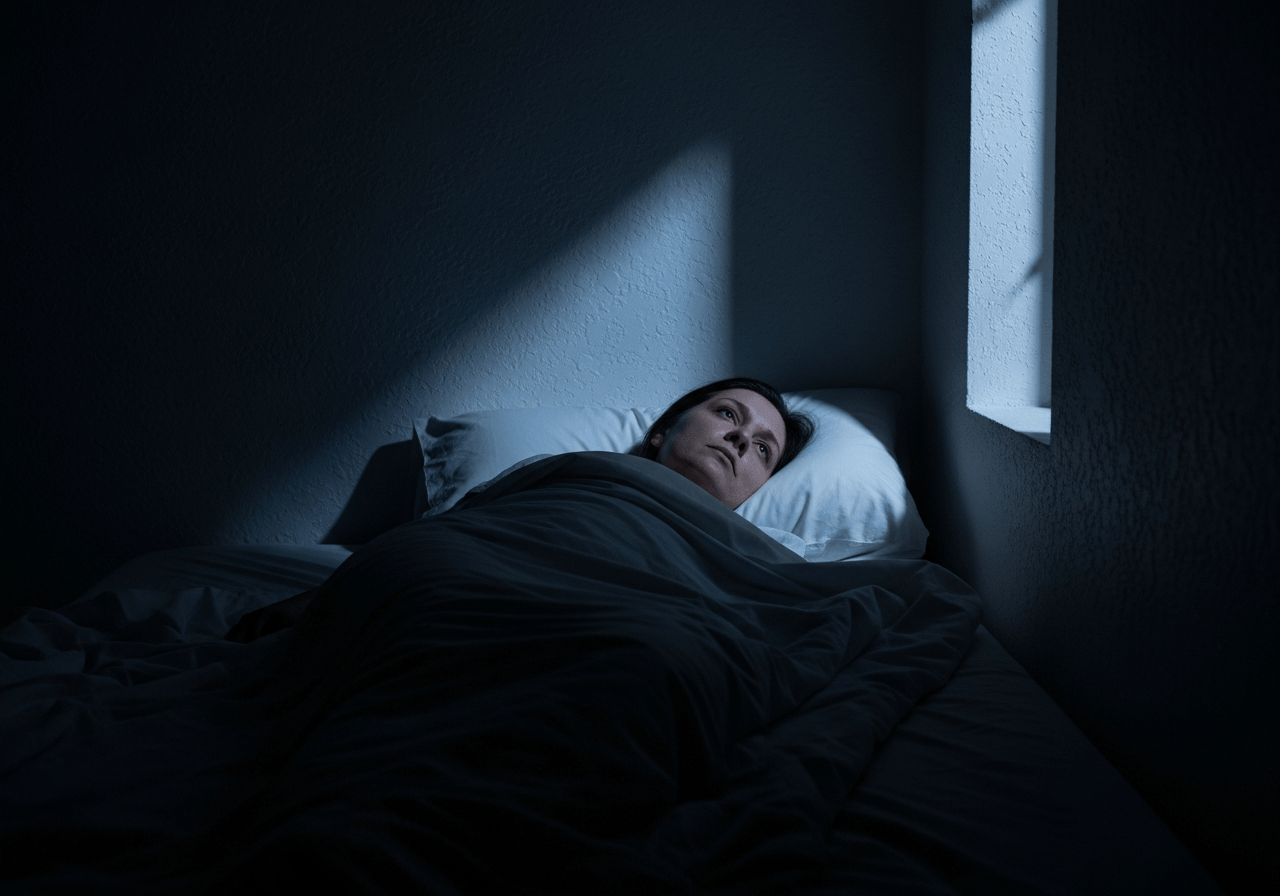
You slept. You know you slept. Eight hours, maybe more. And yet you woke up feeling like the sleep didn’t stick.
That experience is more common than most people realize, and it usually isn’t about duration. It’s about what’s happening, or not happening, inside those hours. A new study from Ohio State University, published in June 2026 in the journal Neuropsychopharmacology, found something that may help explain the difference. Chronic CBD treatment in a mouse model didn’t just increase sleep time. It restored what researchers call “sleep homeostasis”: the biological system your brain uses to regulate sleep quality in the first place.
That’s a different kind of finding, and it’s worth understanding.
What the Researchers Found
The research team, led by Tyler Shannon in the laboratory of neuroscientist Bin Gu at Ohio State’s Department of Neuroscience, worked with mice that lack a gene called Ube3a. That deletion causes Angelman syndrome, a neurological condition that severely disrupts sleep: fragmented rest, too little REM sleep, and a broken relationship with the kind of deep, restorative cycles that leave you feeling recovered in the morning.
After chronic CBD treatment, three things changed:
- REM sleep increased during the dark cycle, the period when these nocturnal animals are most active (corresponding to overnight sleep for humans)
- The “Siesta” returned, a naturally occurring midday rest period that the syndrome had disrupted
- Sleep homeostasis improved
That third finding is the one to pay attention to. Sleep homeostasis is the system that builds sleep pressure over the course of a waking day, driven largely by a compound called adenosine that accumulates in your brain. When this system is working correctly, you sleep, the pressure clears, and you wake feeling rested. When it isn’t working, you can clock a full night and still feel like you never really recovered. The study found that CBD helped restore that regulatory function in mice where it had broken down.
Why a Mouse Study Matters Here
It’s fair to ask why a mouse experiment is worth paying attention to. The answer is that sleep biology is one of the areas where mice and humans are unusually similar.
Yes, mice are nocturnal, and their sleep cycles are much shorter. But the structure of sleep follows the same biological logic in both species: the cycling between REM and non-REM stages, the way adenosine builds up and drives the need for rest, the way the brain consolidates memory and repairs itself during sleep. If you’re trying to understand a sleep mechanism, mice are a reasonable model to study.
The endocannabinoid system (ECS) is also one of the most consistent systems across mammals. The CB1 receptors that regulate sleep-wake cycles exist in the same form in mice and humans, in the same brain regions, doing the same job. When CBD modulates the ECS to restore sleep homeostasis in mice, it’s describing a mammalian mechanism, not a species-specific quirk.
Does that mean the same thing will happen in humans? Not automatically. That’s what human trials are for. But it does tell us something real about how the ECS interacts with sleep regulation at a biological level.
The ECS and Sleep: What We Already Know
This study didn’t arrive in a vacuum. The relationship between the endocannabinoid system and sleep has been growing as an area of research for more than a decade.
CB1 receptors are concentrated in the hypothalamus and brainstem, two regions deeply involved in regulating when we sleep and how we cycle through sleep stages. Research has found that the ECS helps manage those transitions, particularly into and out of REM sleep.
CBD doesn’t work the way THC does. It doesn’t bind directly to CB1 receptors and force a response. Instead, it appears to slow the breakdown of your body’s own endocannabinoids (particularly one called anandamide), allowing them to stay active longer and support the ECS’s natural role. The exact mechanism behind what this study found hasn’t been fully mapped out, which is worth being honest about.
For additional context: a separate expert consensus paper published in Epilepsia Open in 2026 noted that in patients with another serious neurological condition, early data suggest CBD may benefit sleep, alertness, and behavior beyond its better-known effects on seizure activity. A different condition, a different study design, but pointing at the same general picture.
What This Means for You
The Safety Picture
CBD has a well-established safety record across both clinical trials and consumer use. At typical doses, the side effects most commonly reported are drowsiness, minor digestive changes, and at higher doses, reduced appetite.
One finding that comes up consistently in human studies: CBD does not suppress REM sleep. This separates it from several pharmaceutical sleep aids, including benzodiazepines and many antihistamine-based products, that produce sedation partly by reducing time in REM. For anyone who has taken a sleep aid and woken up feeling groggy rather than rested, that distinction matters.
The doses used in this animal study were not detailed in the publicly available abstract, so we can’t draw a direct line between what was used in the research and what’s in a consumer gummy. Anyone on medications should check with a doctor before adding CBD, since CBD is metabolized through liver enzymes shared by several common drug classes.
The ECS Connection
The endocannabinoid system is in everyone. It doesn’t operate differently because you don’t have Angelman syndrome. What the syndrome does is create such a severe disruption to sleep regulation that it becomes easy to measure, and to observe what restoring those systems looks like. The biology underneath is the same.
For people dealing with ordinary sleep problems (inconsistent sleep, waking up in the night, not feeling rested even after a full night), the same mechanisms are involved. They’re just disrupted less dramatically. The Ohio State study suggests CBD may support the regulation of those mechanisms, not just add sedation on top of a broken system.
The Stress Connection
Chronic stress is one of the most common drivers of disrupted sleep quality in otherwise healthy adults. Cortisol and other stress hormones interfere with adenosine signaling, the same system this study focused on, and disrupt the cycling through restorative sleep stages. The result is often exactly what people describe: sleeping “enough” and still feeling tired.
The ECS is also a central system for managing the body’s stress response. Research increasingly suggests that CBD’s effect on sleep may work partly through its influence on stress signaling, not only through direct sleep pathways. This study doesn’t prove that connection. But it fits with what the broader research on the ECS and stress is showing.
Limitations Worth Knowing
A few honest points:
- This is an animal study, not a human trial. The findings are mechanistically interesting and come from a serious research team at a well-regarded institution, but they don’t yet tell us what will happen in human clinical trials.
- Specific CBD doses from the study aren’t publicly available in the abstract, so we can’t compare them to consumer product doses.
- The seizure findings are specific to Angelman syndrome and should not be read as a claim about CBD and seizures in the general population.
- The study received funding from Jazz Pharmaceuticals, the manufacturer of Epidiolex (the FDA-approved CBD medication for epilepsy). The researchers noted the funder had no role in the analysis or publication.
Why This Study Is Worth Following
What made this result notable is what CBD specifically restored: not just more sleep, but a functioning sleep regulation system. Sleep homeostasis isn’t a detail at the margins of sleep biology. It’s the mechanism that determines whether sleep actually does what it’s supposed to do.
If that finding holds up in human research, the story on CBD and sleep becomes something more interesting than “CBD helps you relax and fall asleep.” It becomes a story about CBD supporting the systems that make sleep restorative. Those are meaningfully different things, and the difference matters for the millions of people who feel like sleep isn’t working for them even when they’re getting enough of it.
We’ll continue covering the research in this area as it develops.
About the Original Study
Title: Cannabidiol corrects sleep deficits and reduces spontaneous seizures in Angelman syndrome model mice
Published: June 9, 2026
Authors:
- Tyler Shannon, graduate researcher, Department of Neuroscience, The Ohio State University
- Mariam Najeeb, graduate researcher, Department of Neuroscience and Neuroscience Program, The Ohio State University
- Yoon-Jae Yi, Department of Neuroscience, The Ohio State University
- Yuyan Shen, Department of Neuroscience and College of Veterinary Medicine, The Ohio State University
- Bin Gu, principal investigator, Gu Laboratory, Department of Neuroscience, The Ohio State University
Link: https://pubmed.ncbi.nlm.nih.gov/42265437/

Contributing Expert
Alan first discovered CBD while recovering from a sports injury — and he’s been an advocate ever since. Over the years, he’s used CBD for sleep, skincare, easing anxiety, and even helping his family pet stay calm. With more than 20 years of experience running a marketing business, Alan now enjoys sharing scientific studies and personal experience with customers at Flourish + Live Well.