What a Small OCD Trial Says About the Doses on Store Shelves
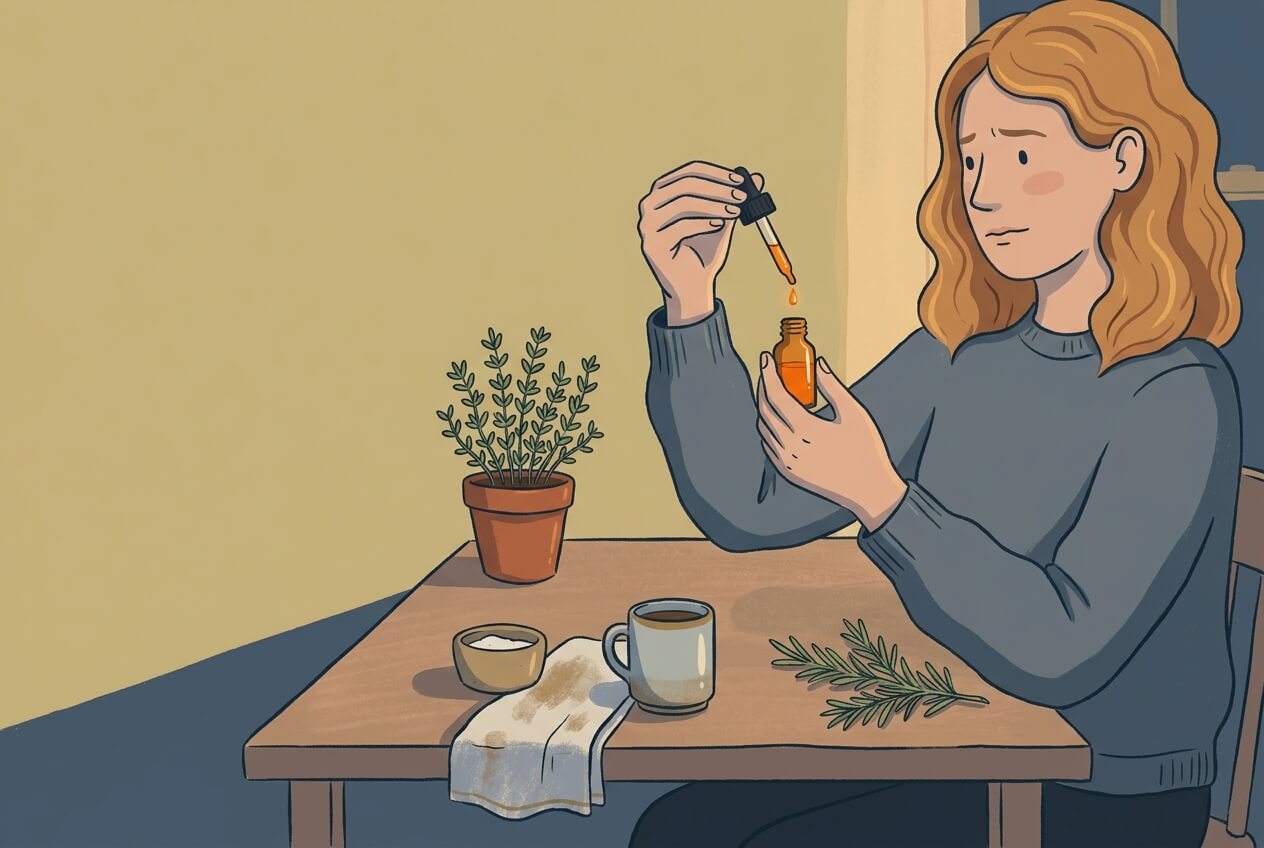
Key finding: a research group tested CBD at 25 milligrams a day, which is roughly what a serving from an ordinary tincture bottle delivers, and measured the result against a placebo. That sentence sounds unremarkable until you look at what most CBD trials use. A great many of the clinical trials that reach the headlines run at 300, 600, or even 1,500 milligrams a day, and a few go higher still. Walk into a shop and read a label, and the serving size is closer to 25 or 30 milligrams. The research and the shelf are describing two different things. So a trial that tests the amount people are already taking is worth paying attention to, even when it is small, and even when the question it asks is a narrow one.
A study published in July 2026 in the Annals of Indian Psychiatry did exactly that. Researchers at Qazvin University of Medical Sciences in Iran gave 25 milligrams of CBD a day, in drops, to people being treated for obsessive-compulsive disorder, and compared them against a matched group taking placebo drops.
Why the dose is the interesting part
CBD is not unusual among compounds in having a dose-response relationship, which simply means that how much you take changes what happens. The complication is that most of the well-funded CBD research has been built around pharmaceutical-scale amounts, because those trials were often designed to support drug development rather than to describe what happens to a consumer.
That leaves an awkward space in the middle. When a study reports that 600 milligrams of CBD did something measurable, it is fair to ask whether 25 milligrams would do anything at all, and the usual answer is that nobody has checked. This trial checked, which is why we think it deserves attention despite its size.
We want to be careful here, because there is a version of this argument that overreaches. A single small trial at a consumer dose does not overturn the larger literature, and it does not establish that 25 milligrams is a generally effective amount for anything. What it does is add a data point in the range where almost none exist.
What the researchers did
The design was a randomized controlled trial, which is the structure that lets researchers separate an effect from wishful thinking. Thirty people diagnosed with obsessive-compulsive disorder were divided into two groups. One group received 25 milligrams of CBD daily as drops; the other received 25 milligrams of placebo, delivered the same way, so that neither the appearance nor the routine of taking it gave the game away.
Two details of the design matter for reading the result correctly.
- It was an adjunctive trial. CBD was added on top of the treatment participants were already receiving, rather than replacing it. Nobody in this study stopped their existing care to take CBD instead.
- It ran on a fixed schedule with fixed checkpoints. Participants were assessed at the start, again at four weeks, and again at eight weeks, so the researchers could watch the direction of change over time rather than taking a single snapshot at the end.
How they measured it
Symptoms were tracked using the Yale-Brown Obsessive Compulsive Scale, usually shortened to Y-BOCS. It is the standard instrument in this field, and it works by scoring both obsessions and compulsions across dimensions such as how much time they take up, how much distress they cause, and how much they interfere with ordinary activity. A higher score means more severe symptoms, so researchers are looking for the number to come down.
The analysis used repeated measures ANOVA, a statistical method built for exactly this situation: several groups, measured more than once, where the question is whether the groups changed differently over the course of the study.
What they found
The mean OCD score fell over the study period in the group taking CBD, and the difference between the groups across the measured timepoints reached statistical significance, reported at p < 0.05.
That phrase is worth unpacking, because it is easy to read more into it than it carries. A p-value below 0.05 means the pattern the researchers observed would be unlikely to show up by chance alone if there were no underlying difference. It does not tell you how large the difference was, and it does not tell you whether the change would be noticeable in daily life. Those are separate questions, and in a trial of thirty people they are questions that a follow-up study has to answer.
We looked for the individual Y-BOCS scores at each checkpoint so we could tell you how far the numbers moved, and they sit behind the journal’s paywall. Rather than estimate them, we are telling you what the paper reports: the direction of change favored CBD, and the comparison reached significance. The size of the effect is something we cannot describe accurately, so we are not going to describe it at all.
The authors themselves close by calling for trials in larger populations, which is the appropriate conclusion from a study of this size.
What this means for you
Most readers do not have obsessive-compulsive disorder, and this article is not suggesting that anyone manage a psychiatric condition with a supplement. So it is worth being specific about what a study like this offers someone outside the population it studied.
The safety picture at ordinary doses
One quiet finding in trials at this end of the dose range is how little drama they produce. Twenty-five milligrams a day is a modest amount, and studies using doses in this neighborhood generally report that participants tolerate it without difficulty. That is not the same as saying CBD is inert or that it suits everyone, and it says nothing about how CBD interacts with medications you may already be taking. CBD is processed by the same liver enzymes that handle a long list of common prescriptions, so that question belongs with your doctor or pharmacist, who can look at what you are taking. It is not something a newsletter can answer for you.
The endocannabinoid system is not specific to any diagnosis
The reason researchers keep testing CBD across such a wide range of conditions is that the endocannabinoid system is present in everyone. It is involved in regulating things as varied as mood, sleep, appetite, and how the body responds to stress. A trial in a clinical population is testing what happens when you nudge that system in people who have a particular difficulty; the system being nudged is the same one you have.
Routine, and why September is when people notice it
There is a seasonal reason this study lands well in early September. Summer schedules end, work and school routines restart, and a great many people feel the transition as a jump in mental load. Obsessive-compulsive disorder is a specific clinical condition and not a stand-in for ordinary stress, so we are not going to blur the two. But the underlying observation, that structured routine and a settled nervous system affect each other, is something most people recognize from their own experience.
Limitations worth knowing
Five things constrain what this trial can tell anyone:
- Thirty participants is small. Small trials produce unstable estimates, and a result that reaches significance in thirty people may not survive in three hundred. This is a signal, not a settled finding.
- The broader evidence does not yet support a conclusion. A 2026 systematic review and meta-analysis published in The Lancet Psychiatry, covering 54 randomized trials of cannabinoids across mental health and substance use disorders, concluded that the available data are insufficient to determine whether cannabinoids are effective for obsessive-compulsive disorder. That review is the current state of the field, and this trial does not change it.
- CBD was an addition, not a replacement. Every participant continued their existing treatment. The trial says nothing about CBD used on its own.
- The effect size is not something we can report. As described above, the per-timepoint figures were not accessible to us.
- One site, one population. The study was conducted at a single center in Qazvin Province, Iran. Whether the result holds in different populations and different care settings is an open question.
Where that leaves the dose question
The reason to read this study is not that it answers anything about obsessive-compulsive disorder, because it does not, and the larger reviews say so plainly. The reason to read it is that a research group tested 25 milligrams a day, on a schedule, against a placebo, and measured what happened with a standard instrument.
Most of what gets written about CBD sits at one of two extremes: pharmaceutical trials at doses nobody buys, or claims with no measurement behind them at all. Work in the middle of that range is uncommon, and we would like to see a great deal more of it. When it arrives, we will tell you what it says, including the parts that do not flatter the category.
About the Original Study
Title: Evaluation of Cannabidiol Effects as an Adjunctive Therapy on Symptoms of Patients with Obsessive-compulsive Disorder
Published: July 24, 2026, Annals of Indian Psychiatry
Authors:
- Nazli Zahedi (Department of Psychiatry, Clinical Research Development Unit, 22 Bahman Hospital, Qazvin University of Medical Sciences, Qazvin, Iran)
- Mahnaz Majidi (Department of Clinical Psychology, Science and Research Branch, Islamic Azad University, Tehran, Iran)
- Bahare Rezaei (Department of Psychiatry, Clinical Research Development Unit, 22 Bahman Hospital, Qazvin University of Medical Sciences, Qazvin, Iran)
- Monirsadat Mirzadeh (Metabolic Diseases Research Center, Research Institute for Prevention of Non Communicable Diseases, Qazvin University of Medical Sciences, Qazvin, Iran)
- Seyed Mohsen Zamir (Department of Psychiatry, Clinical Research Development Unit, 22 Bahman Hospital, Qazvin University of Medical Sciences, Qazvin, Iran)
Link: https://doi.org/10.4103/aip.aip_67_25
META DESCRIPTION: Most CBD trials use doses nobody buys. A small randomized trial tested 25 mg a day in patients with OCD. Here is what it found, and what it could not show.
Contributing Expert
Alan first discovered CBD while recovering from a sports injury — and he’s been an advocate ever since. Over the years, he’s used CBD for sleep, skincare, easing anxiety, and even helping his family pet stay calm. With more than 20 years of experience running a marketing business, Alan now enjoys sharing scientific studies and personal experience with customers at Flourish + Live Well.