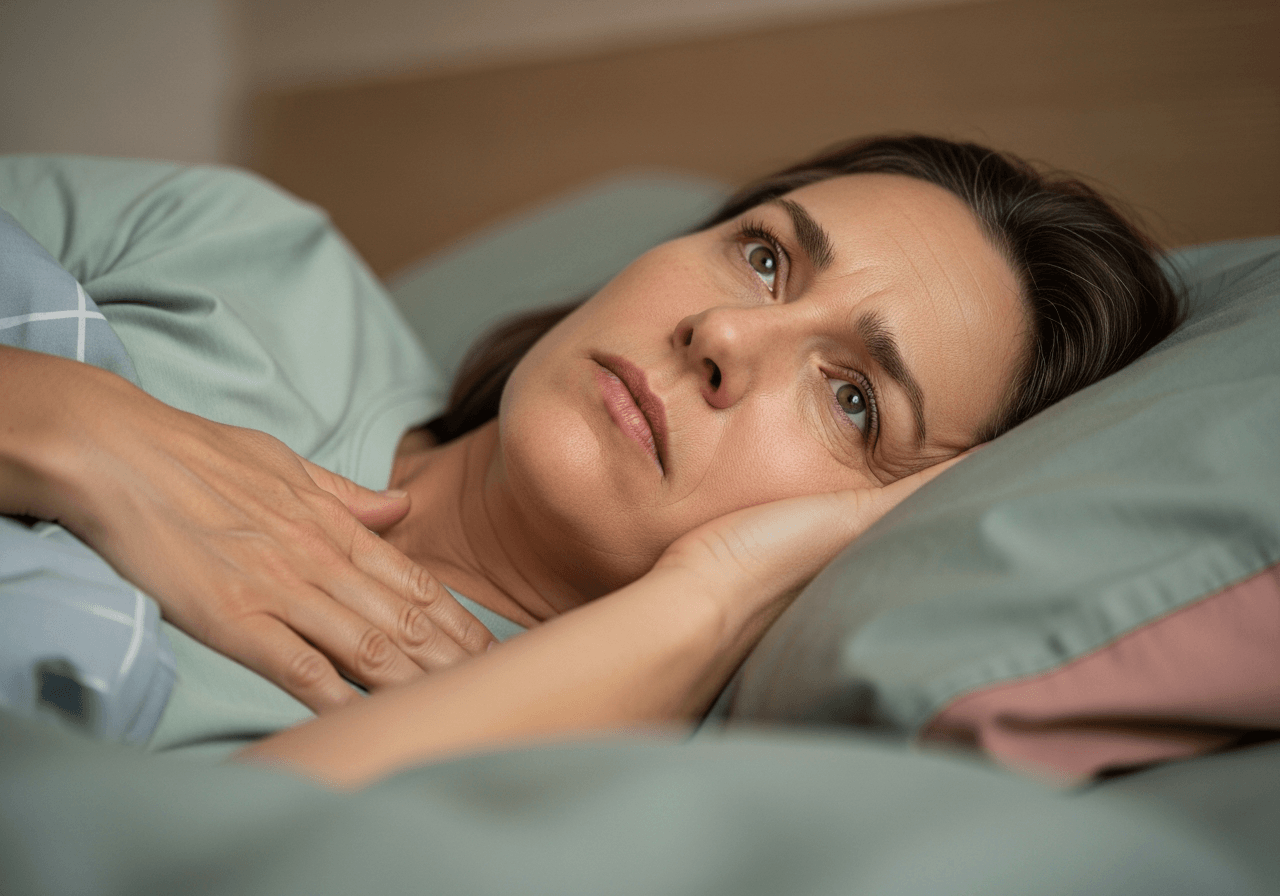
What Researchers Found When Eleven People With PTSD Added CBD to Their Care
Almost everyone has a memory that arrives without being invited. A smell, a sound, a certain slant of light, and suddenly you are back somewhere you did not choose to go. For most people the moment passes. For someone living with post-traumatic stress disorder, that moment can take over the whole day, and the night after it.
PTSD is not weakness and it is not overreaction. It is a nervous system that learned to treat a past danger as a present one, and then could not fully unlearn it. The memories intrude, sleep breaks apart, and the body stays braced for a threat that already came and went. Standard care helps many people, but not everyone, and not completely. So researchers keep looking for tools that might sit alongside the ones we already have.
One of those tools under study is cannabidiol, the non-intoxicating compound in hemp that most people know as CBD. A team of clinicians in Colorado looked at what happened when they added CBD to the routine care of real patients who were already living with PTSD. The results were modest, honest, and worth understanding.
What the Study Looked At
The study was a retrospective chart review published in 2019 in the Journal of Alternative and Complementary Medicine. The clinicians worked at an outpatient psychiatric clinic and went back through the records of adults who had been diagnosed with PTSD and who took CBD for eight weeks as part of their treatment.
Eleven patients met the criteria for the review. They were not asked to stop their other care; CBD was added on top of the psychiatric treatment they were already receiving. The researchers then tracked a standard, well-validated questionnaire called the PCL-5, which mental health professionals use to measure the severity of PTSD symptoms.
This design matters, and we will come back to it, because a chart review is a starting point rather than a verdict. It watches what happened in a real clinic; it does not compare CBD against a placebo. That distinction shapes how much weight the numbers can carry.
The PCL-5 is worth understanding, because it is the yardstick the whole study rests on. It asks about the symptoms that define PTSD: intrusive memories and flashbacks, nightmares, avoiding reminders of the event, feeling constantly on guard, and the low, flattened mood that often comes with all of it. A higher score means a heavier load. When researchers say a score dropped, they mean the person reported fewer of those symptoms, less often, at a lower intensity. It is a self-report, so it captures how the person actually feels rather than a lab value, which for a condition like PTSD is exactly the point.
What the Numbers Showed
Across the eight weeks, most of the group improved on the PCL-5.
- Ten of the eleven patients (91%) saw their PTSD symptom scores go down. Symptoms easing in nearly everyone tracked is the headline the researchers reported.
- The average PCL-5 score fell about 28%, from a mean of 51.82 at the start to 37.14 after eight weeks. On that scale, that is a meaningful move in the right direction.
- Eight of the eleven also reported that their sleep improved. For a condition that so often steals rest, that detail stood out.
- CBD was well tolerated. No one in the group stopped taking it because of side effects.
One more point is worth holding onto: the doses were not extreme. Most patients started on modest oral amounts, in the range of a common CBD capsule rather than a large clinical dose. The improvements showed up alongside everyday, real-world amounts.
What Supporting Research Adds
A single clinic’s chart review is more convincing when a stronger study design points the same way, and one does.
In 2022, a research group at the University of São Paulo in Brazil ran a randomized, double-blind, placebo-controlled trial. Thirty-three people with PTSD were split into two groups. Seventeen received a single 300 mg dose of CBD and sixteen received a placebo, and then each person was asked to recall their traumatic event under controlled conditions.
The people who took CBD showed a smaller rise in cognitive impairment during that difficult recall, and the difference was still measurable a week later. In plain terms, CBD appeared to take some of the edge off the moment of remembering, and that softening did not vanish by the next day.
The trial is clear about its limits. CBD did not outperform placebo on every measure, and a companion analysis found the benefit was clearer for people whose trauma was not sexual in nature, which suggests the right dose may depend on the person and their history. Two small studies with different designs are a starting point, not a settled answer.
How CBD May Fit Into the Picture
To understand why CBD keeps turning up in trauma research, it helps to know about a system most people have never heard of, even though every one of us has it.
The endocannabinoid system
The body runs a network called the endocannabinoid system, and one of its jobs is helping to regulate fear, stress, and how memories are stored and settled. It is part of how a healthy nervous system files an alarming event as “over” instead of “still happening.” Researchers are studying whether CBD, by interacting with that system, might gently support the process of letting a fear response wind down. This is a mechanism being explored, not a switch being flipped, and the science is still early.
Two ideas from that research help explain why trauma studies keep testing CBD. The first is fear extinction, which is the brain’s natural way of learning that an old cue is no longer dangerous. In people with PTSD, that learning tends to stall, and the alarm keeps firing. The second is memory reconsolidation, the brief window when a memory is pulled up and becomes changeable again before it settles back down. The Brazilian trial was built around exactly that window, which is why participants took CBD right before recalling their trauma. The working question in both cases is the same: can CBD help the nervous system update an old threat signal instead of replaying it.
Why this reaches beyond the clinic
You do not need a PTSD diagnosis to know what it feels like when a stressful moment refuses to let go. A hard conversation replays at 2 a.m. A near-miss on the highway keeps your hands tight on the wheel long after the danger passed. The same stress-and-memory machinery the researchers were studying is the machinery all of us carry. That is part of why this line of research draws such interest; it touches something close to a universal human experience.
What This Means for You
If you are curious about CBD after reading this, a few honest points are worth keeping in mind.
The safety picture in this research was reassuring. Across the eight-week review, CBD was well tolerated and no one quit over side effects, which fits the broader pattern seen in other CBD studies. CBD can still interact with certain medications, so anyone taking prescriptions, and especially anyone managing a diagnosed condition, should talk with their own doctor before starting.
The mechanism is not exclusive to people with a diagnosis. The endocannabinoid system that helps regulate stress and memory is in everyone. That is why so many people reach for CBD simply to take a little tension out of an ordinary hard week, not to treat any specific disorder.
And the everyday connection is real. Most of us are carrying some low hum of stress that follows us into the evening and interferes with rest. The people in the primary study reported better sleep alongside calmer days, and better sleep is something almost anyone can appreciate.
Worth Keeping in Mind
Good research comes with honest footnotes. Here are the ones that matter for putting these findings in perspective.
- The primary study was small and open-label. Eleven patients, no placebo group, and a mostly female sample. It observed a promising pattern; it did not prove cause and effect.
- Other care was in the mix. Patients kept their existing psychiatric treatment, and some medications changed during the eight weeks, so CBD cannot take sole credit for the improvement.
- Expectation can shape results. People who chose an integrative clinic and agreed to try CBD may have expected it to help, and belief alone can move symptom scores.
- Consumer products are not clinical PTSD care. The studies used measured, monitored doses under professional supervision. A wellness CBD product is not a treatment for PTSD, and nothing here should replace care from a qualified professional.
None of this makes CBD a cure for PTSD, and no supplement resolves trauma on its own. What the two studies point to is more modest and more useful: lower symptom scores in one, calmer trauma recall in the other, across two different research designs. That is a reason to keep studying CBD as one part of a larger plan, and a reason for anyone carrying stress that lingers to pay attention.
About the Original Study
Title: Cannabidiol in the Treatment of Post-Traumatic Stress Disorder: A Case Series
Published: 2019, Journal of Alternative and Complementary Medicine, 25(4), 392-397. DOI: 10.1089/acm.2018.0437
Authors:
- Lucas Elms, DO. Integrative psychiatrist and lead author, who conducted the review as an osteopathic medical student at Rocky Vista University in Colorado.
- Scott Shannon, MD. Assistant Clinical Professor of Psychiatry, University of Colorado, and founder of the Wholeness Center integrative mental health clinic in Fort Collins.
- Shannon Hughes, PhD. Associate Professor, School of Social Work, Colorado State University, researching psychotropic medication and mental health.
- Nicole Lewis, ND. Naturopathic doctor practicing in Fort Collins, Colorado.
Link: Read the study
Contributing Expert
Alan first discovered CBD while recovering from a sports injury — and he’s been an advocate ever since. Over the years, he’s used CBD for sleep, skincare, easing anxiety, and even helping his family pet stay calm. With more than 20 years of experience running a marketing business, Alan now enjoys sharing scientific studies and personal experience with customers at Flourish + Live Well.