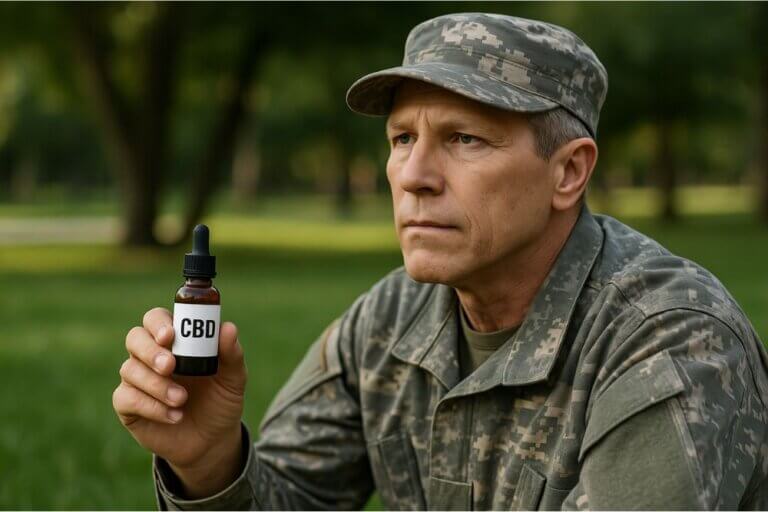
CBD’s gentle balance may bring lasting comfort to those who’ve carried pain long after the battle ended. Here’s what a large U.S. clinical trial says!
For many Veterans, the battle doesn’t end when they come home.
Long after uniforms are hung up and medals tucked away, another fight begins, one that’s silent, personal, and often unseen. Chronic pain becomes a constant companion. Sleep slips away. Simple tasks start to feel like uphill climbs.
For some, the toughest part isn’t the pain itself, but how isolating it feels. The world moves on while their bodies keep reminding them of what came before.
Medications can help, but side effects, dependency risks, and limited results leave many Veterans searching for something gentler, something that helps them live again, not just get by.
That’s where CBD is beginning to enter the picture.
A New Chapter in Pain Relief
Cannabidiol, better known as CBD, has become one of the most talked-about natural compounds in wellness today. It works with the body’s own systems to promote balance, reduce stress, and support a sense of calm.
Over the last few years, countless people have turned to CBD to help ease tension, inflammation, and restless nights. And now, researchers are exploring its potential for one of the communities that may need it most: America’s Veterans.
At the University of Michigan and VA medical centers across the country, a team of scientists and clinicians has launched a clinical trial, one of the largest of its kind, to study how CBD might help Veterans living with chronic pain.
Bringing Science to Real Life
This isn’t a small laboratory test or a short-term survey. It’s a nationwide, double-blind clinical trial involving 468 Veterans, each living with ongoing pain that’s been hard to manage through standard treatments.
Participants receive either a CBD oral solution or a placebo for four weeks. But what makes this study special is its real-world design. Everything from enrollment to daily tracking is done remotely through a smartphone app.
CBD doses and study materials are delivered straight to participants’ homes, allowing them to continue their normal routines while contributing to something bigger: the search for relief.
The main goal? To see whether those using CBD report greater overall improvement in their pain, energy, and day-to-day comfort than those who don’t.
But the study doesn’t stop at pain alone. Researchers are also measuring how CBD may affect sleep, anxiety, and mood because pain rarely travels alone.
Why Veterans Need New Options
For many Veterans, chronic pain isn’t caused by just one thing. It’s often a mix of old injuries, joint wear, nerve sensitivity, and the emotional weight that comes from years of pushing through.
Traditional pain medications can be effective, but they often come with a long list of challenges, drowsiness, stomach irritation, tolerance buildup, or, in some cases, risk of dependency.
CBD offers a different path. It’s not about numbing pain, it’s about restoring balance.
Many users describe it as helping them “turn down the volume” on discomfort so they can focus on life again: family dinners, hobbies, sleep, or even a quiet walk without wincing.
This is why researchers designed this study not only to measure physical change, but also how Veterans feel about their progress, their perception of change, calm, and control over their own healing.
A Sense of Hope and Safety
Even before results are finalized, one thing is already clear: CBD’s safety record continues to impress researchers. In past studies, even when results varied in strength, CBD consistently showed minimal side effects and no psychoactive effects.
That reliability matters deeply for Veterans who have tried countless pain relief options only to face new complications.
Here, the goal is simple: to find out if CBD can provide meaningful, consistent comfort without taking something else away in the process.
Dr. Rachel Bergmans, one of the lead investigators, put it simply in the study’s announcement: “Veterans deserve safe, effective pain care options that help them reclaim their quality of life.”
And that’s what this research is all about.
Beyond Pain Relief: The Human Side of Healing
Pain doesn’t just live in the body; it lives in memory.
For many Veterans, slowing down because of pain feels like losing a part of who they used to be.
CBD’s promise isn’t just in easing discomfort. It’s in restoring confidence, the ability to rest without guilt, to move without wincing, to live without fear that comfort always comes at a cost.
While researchers measure pain scores and sleep data, the real results will be found in the small moments:
- A morning stretch that doesn’t hurt.
- A full night’s sleep without tossing and turning.
- The quiet return of ease.
That’s the kind of healing data can’t capture, but life certainly can.
What This Means for You
If you’re living with chronic pain, Veteran or not, this study represents something bigger than data. It’s a signal that the world is beginning to take natural relief seriously.
CBD isn’t about instant fixes. It’s about a steady, gentle balance that your body can build over time. It may not erase pain, but it might make the edges softer, your nights calmer, and your days more manageable.
Here’s how to start exploring safely:
- Go for quality. Choose CBD products that are lab-tested and clearly labeled for purity and dosage.
- Start small. A low daily dose gives your body time to respond gradually.
- Stay consistent. CBD works best when it becomes part of a routine, not a quick fix.
- Talk to your doctor. Especially if you take other medications, CBD is gentle but should still be used mindfully.
Every Veteran in this trial volunteered because they believe in something better, and that belief alone is powerful.
Because healing, at its core, isn’t just about easing pain. It’s about rediscovering the freedom to live without it.
Original Study Section
Title: Protocol for a Pragmatic Trial of Cannabidiol (CBD) to Improve Chronic Pain Symptoms Among United States Veterans
Date: 2024
Authors: Rachel S. Bergmans, Riley Wegryn-Jones, Catherine Klida, Vivian Kurtz, Laura Thomas, David A. Williams, Daniel J. Clauw, Kelley M. Kidwell, Amy S. B. Bohnert, Kevin F. Boehnke
Link: Read the Study on PubMed
Contributing Expert
Alan first discovered CBD while recovering from a sports injury — and he’s been a believer ever since. Over the years, he’s used CBD for sleep, skincare, easing anxiety, and even helping his family pet stay calm. With more than 20 years of experience running a marketing business, Alan now enjoys sharing scientific studies and personal experience with customers at Flourish + Live Well.