What New Research Says About CBD and the Muscle Ache That Shows Up Two Days After You Move
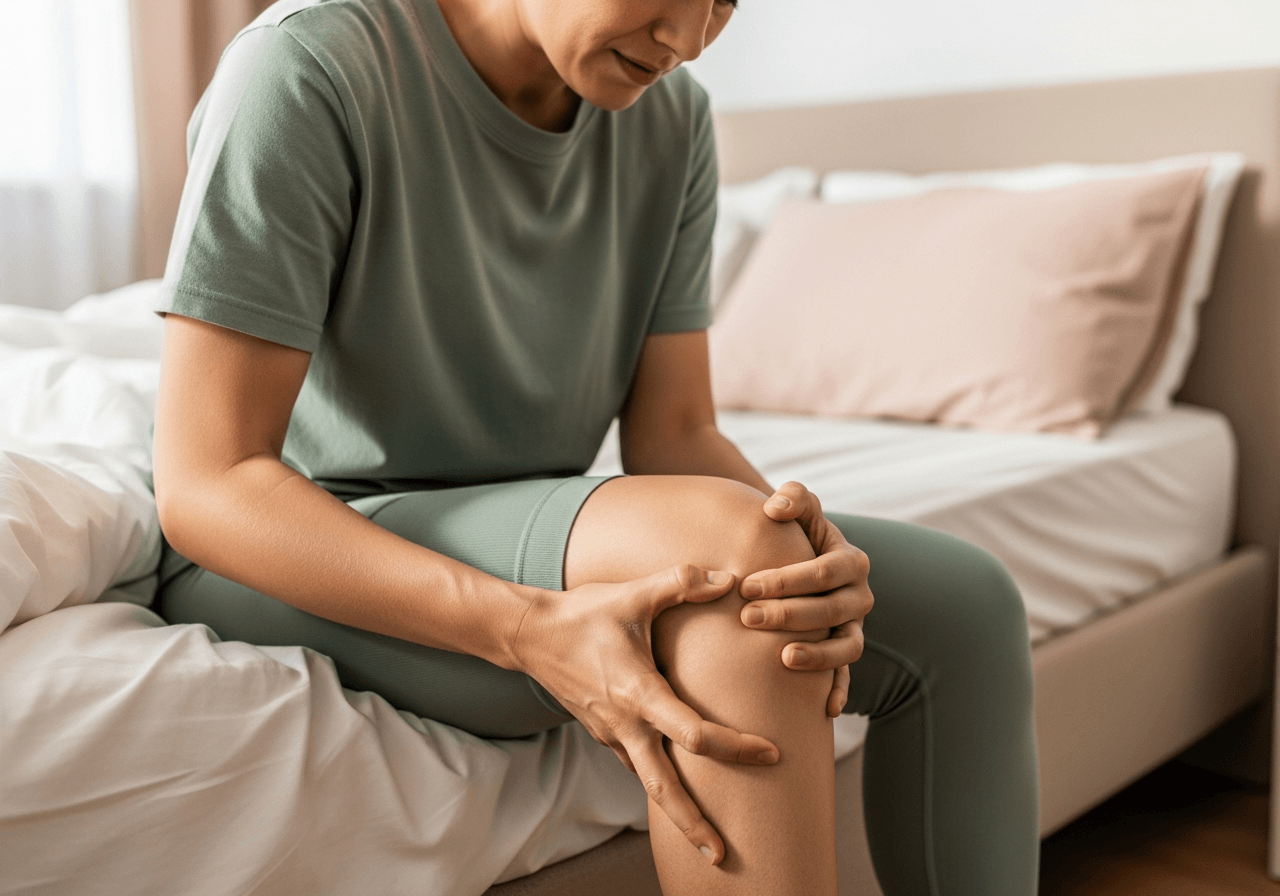
You feel fine the day of the workout. You might even feel good the next morning. Then day two arrives, and getting off the couch turns into a project. That delayed soreness has a name, and a new clinical trial has been looking at whether a single, well-studied compound can take some of the edge off it.
The soreness that peaks about 48 hours after hard exercise is one of the most universal aches there is. It happens to weekend athletes, to people starting a new routine, and to anyone who spent Saturday moving furniture they had no business moving. Researchers call it exercise-induced muscle injury, and the timing of it is remarkably consistent. A team at the University of Florida and Augusta University decided to test whether cannabidiol, better known as CBD, could change how that window feels.
Why the 48-Hour Mark Matters
When you work a muscle harder than it is used to, especially with the kind of movement where the muscle lengthens under load, you create tiny amounts of damage in the muscle fibers. That is normal, and it is part of how muscles get stronger over time. The catch is the recovery period in between, when the area is inflamed, sore, weaker than usual, and slow to respond.
The soreness is not immediate. It builds. Most people feel it worst somewhere between 24 and 48 hours after the effort, which is why the trial focused so closely on that stretch of time. If a compound is going to help, that is the window where it has to show up.
What the Researchers Did
The study was a randomized, double-blind, placebo-controlled feasibility trial, which is the design built to keep both the participants and the researchers from knowing who got what until the data is in. That matters for a subject like CBD, where expectation alone can shift how much pain someone reports.
Twenty-nine healthy young adults took part, nine men and twenty women, with an average age of about 20. Half received CBD and half received a placebo. Nobody knew which.
Here is how the two weeks were structured:
- Participants took their assigned product under the tongue twice a day for 15 days, a total of 67 mg of CBD per day for the active group.
- On day 10, everyone did a high-intensity resistance exercise session designed to bring on real muscle soreness and strength loss.
- The researchers then measured pain, strength, and function at set checkpoints: baseline, then 24, 48, 72, and 96 hours after the exercise.
Taking the product for several days before the exercise, rather than only after, let the researchers see whether CBD already in the system made a difference when the soreness arrived.
What the Study Found
The clearest results landed right at the 48-hour mark, the point where the soreness was at its worst for everyone.
Pain
At 48 hours, the CBD group reported lower peak pain both at rest and during movement compared with the placebo group. The size of that difference was moderate, which in a small feasibility study is a meaningful signal rather than a rounding error.
Strength
Muscle soreness usually comes with a temporary drop in how much force you can produce. At 48 hours, the CBD group showed less strength loss than the placebo group when their muscle force was measured directly.
Everyday Function
The researchers also tracked physical disability, meaning how much the soreness got in the way of normal movement and daily tasks. At 48 hours, the CBD group reported less of that functional interference than placebo.
Recovery Time
On average, the CBD group returned to their starting point in about 4.4 days, versus 4.8 days for placebo, roughly half a day sooner. This particular difference did not reach statistical significance, so it should be read as a hint worth studying further, not a settled result.
Safety
Across the full 15 days, there were no reported side effects and no treatment-related adverse reactions in either group. For a wellness product, tolerability is a large part of the picture, and here it held up.
What Supporting Studies Add
One trial on its own is a starting point, not a verdict. What makes this finding more interesting is that other research on CBD and worked muscles has been pointing in a similar direction.
A recovery study in the Journal of the International Society of Sports Nutrition (2023, Peters and colleagues): Forty exercise-trained adults took a twice-daily CBD-based formula for three and a half days after hard exercise.
- At 48 hours, the active group reported that soreness interfered less with their daily activities.
- At 72 hours, their average discomfort ratings ran a little over a full point lower than placebo on the scale used.
- The clear limit here is that the formula also contained CBG and other ingredients, so the study could not isolate CBD’s specific share of the benefit.
A resistance-training study in Nutrients (2021, Isenmann and colleagues): Well-trained participants took oral CBD after an intense session, in a crossover design where each person served as their own comparison.
- The CBD condition showed lower levels of two blood markers of muscle damage, creatine kinase and myoglobin, at 72 hours.
- The effects were small but statistically significant, which suggests CBD may influence the recovery process itself, not only the perception of soreness.
Different populations, different doses, different measurement tools, and the arrow keeps pointing the same way.
What This Means for You
You do not need to be a resistance-training volunteer to land in that 48-hour window. A weekend of yard work, a move, a long hike you were not quite trained for, or a return to activity after time away can all leave you just as sore two days later. That is what makes research like this worth a general reader’s attention, even if you never set foot in a gym.
The Safety Picture
Across this trial, participants took 67 mg of CBD daily for more than two weeks with no reported side effects. That fits the broader pattern in CBD research, where the compound is generally well tolerated at moderate doses. It is still sensible to talk with a doctor if you take other medications, because CBD can interact with how some drugs are processed, but the safety signal in studies like this one is reassuring.
The Endocannabinoid Connection
CBD works with the endocannabinoid system, a network of receptors and signaling molecules that helps regulate pain, inflammation, and recovery. That system is not unique to athletes or to young adults. It runs in everyone. The same biology the study measured in sore lifters is the biology at work when your back tightens after a long drive or your legs ache after a day on your feet.
Worth Keeping in Mind
A clear-eyed reading of this study means holding a few things in view at once:
- The group was small and young. Twenty-nine healthy adults in their early twenties is a feasibility sample, useful for spotting a signal but not for drawing firm conclusions about older adults or people with chronic pain.
- The strongest results were at 48 hours. The benefits clustered around that peak-soreness point rather than showing up evenly across the whole recovery.
- The recovery-time difference was not significant. The half-day head start is intriguing, but the researchers were careful not to overclaim it, and neither should we.
- Dose and consistency matter. Participants took 67 mg of CBD a day for more than two weeks, starting before the soreness arrived. That steady schedule was part of what the trial tested, not a single dose taken once the ache set in.
The Takeaway
What this trial measured was a moderate reduction in peak muscle pain, less strength loss, and less day-to-day interference at the 48-hour mark, all from a well-tolerated daily dose of CBD. The role CBD appears to play is easing the worst of the soreness window rather than erasing it. What we still do not know is the ideal dose, whether the same holds for older adults and chronic pain, and how much of the effect is recovery versus comfort. Those are the questions the next, larger studies will need to answer, and this feasibility trial makes a solid case that they are worth asking.
About the Original Study
Title: Efficacy and safety of cannabidiol (CBD) on reducing pain and functional impairment associated with exercise-induced muscle injury: a randomized placebo-controlled feasibility trial
Published: 2026, Journal of Cannabis Research
Authors:
- J.W. Stauffer, PhD, Department of Applied Physiology and Kinesiology, University of Florida
- J.A. Crow, PhD, Georgia Prevention Institute, Augusta University
- Mark D. Bishop, PT, PhD, Department of Physical Therapy, University of Florida
- Robert L. Cook, MD, MPH, Department of Epidemiology, University of Florida
- Paul A. Borsa, PhD, ATC, Department of Applied Physiology and Kinesiology, University of Florida
Link: Journal of Cannabis Research (2026)

Contributing Expert
Alan first discovered CBD while recovering from a sports injury — and he’s been an advocate ever since. Over the years, he’s used CBD for sleep, skincare, easing anxiety, and even helping his family pet stay calm. With more than 20 years of experience running a marketing business, Alan now enjoys sharing scientific studies and personal experience with customers at Flourish + Live Well.