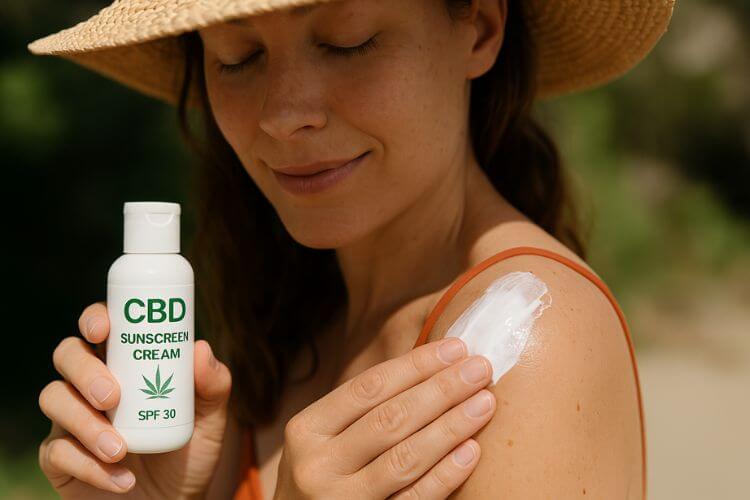
CBD cream won’t replace sunscreen, but it may add a new layer of defense for your skin
Most of us think of sun damage as wrinkles, freckles, or maybe that red burn after a beach day. But the truth is, the real damage happens on the inside. UV-A rays don’t just touch the surface; they sink deeper, messing with the DNA in your skin cells. Over time, that kind of hidden injury fuels premature aging, fine lines, and even raises the risk of skin cancer.
Sunscreen is our main line of defense, but not all filters block UV-A completely. And let’s be honest, not everyone remembers to reapply every two hours. That’s why researchers are exploring new ways to give skin an extra layer of protection.
One surprising candidate? CBD cream.
Imagine applying a cream that doesn’t just moisturize, but also helps block or repair the cellular harm from UV stress. That’s what a new human trial is exploring with a nano-encapsulated CBD cream.
Why CBD for Sun-Stressed Skin?
CBD (cannabidiol) has been building a reputation in wellness circles, but beyond calming nerves or easing pain, it’s also known as a powerful antioxidant and anti-inflammatory compound.
In lab studies, CBD has been shown to:
- Switch on protective pathways (like Nrf2) that help cells fight oxidative stress.
- Calm inflammatory reactions triggered by UV light.
- Support healthy skin cell repair.
So, the question researchers asked was simple: if you put CBD into a topical cream, could it help shield the skin against UV-A’s silent, deeper damage?
How Researchers Tested the Cream
This was a clinical trial involving 19 participants. A special nano-CBD cream (nCBD) was applied twice daily to small patches of skin for two weeks.
Nano-formulation just means the CBD was broken down into ultra-tiny particles so it could actually soak into the skin layers where damage happens. After 14 days, both sites were exposed to controlled UV-A light.
They checked the skin 24 hours later, both visually and under the microscope, and even analyzed DNA in the cells to see what happened.
Signs of Skin Protection After Using CBD Cream
The results were eye-opening and encouraging:
- Less redness: About 21% of participants showed less visible redness (erythema) on the CBD-treated skin
- Calmer skin response: Under the microscope, the CBD-treated patches showed less skin thickening (epidermal hyperplasia), which is the skin’s way of reacting to UV stress.
- DNA protection: This is where it gets exciting. The CBD cream reduced markers of DNA injury inside the cells, especially 8-oxoguanine, a common sign of oxidative DNA damage.
- Mitochondrial health: CBD also seemed to protect the skin’s mitochondria (the energy “batteries” of cells) from DNA deletions that usually spike after UV exposure. These mitochondrial mutations are strongly linked to skin aging.
The CBD-treated skin looked calmer, and its DNA showed fewer signs of stress after UV-A.
Why This Could Matter for Everyday Skin Health
We’re constantly exposed to UV-A—not just at the beach, but from daylight that streams through windows or even indoor lighting. That means our skin is quietly taking hits every single day.
A product that can strengthen skin’s resilience at the DNA level—even a little—could make a difference over the years. Imagine combining sunscreen (to block rays) with CBD cream (to calm and protect cells) for a more complete strategy.
For anyone concerned about premature aging, fine lines, or skin wellness in general, this trial hints at a future where CBD plays a role in holistic sun care.
What This Means for Your Skincare Routine
So, should you toss your sunscreen and swap in CBD cream? Not so fast. Here’s the real-world takeaway:
If you’re curious about adding CBD into your skincare lineup, here’s how to think about it:
- Think “extra defense,” not replacement: This cream doesn’t block UV rays the way sunscreen does. Instead, it seems to reduce the cellular damage that still gets through.
- Go for advanced formulas: Regular CBD oil or cream may not penetrate deeply enough. This study used nano-encapsulated CBD to make sure it reached the right layers of skin.
- Consistency counts: Participants applied it twice a day for 14 days before UV testing. The benefits likely come from regular use, not a one-time dab.
- Take photos and track progress. Watch for changes in redness, texture, and firmness; these are the signs you’ll notice before molecular measures do.
Original Study Section
Title: Topical nano-encapsulated cannabidiol cream as an innovative strategy combating UV-A-induced nuclear and mitochondrial DNA injury: A pilot randomized clinical study
Date: Nov 2024
Authors: Erika McCormick, Haowei Han, Sara Abdel Azim, Cleo Whiting, Nitish Bhamidipati, Alexi Kiss, Tatiana Efimova, Brian Berman, Adam Friedman
Link: Read on PubMed
Contributing Expert
Alan first discovered CBD while recovering from a sports injury — and he’s been a believer ever since. Over the years, he’s used CBD for sleep, skincare, easing anxiety, and even helping his family pet stay calm. With more than 20 years of experience running a marketing business, Alan now enjoys sharing scientific studies and personal experience with customers at Flourish + Live Well.