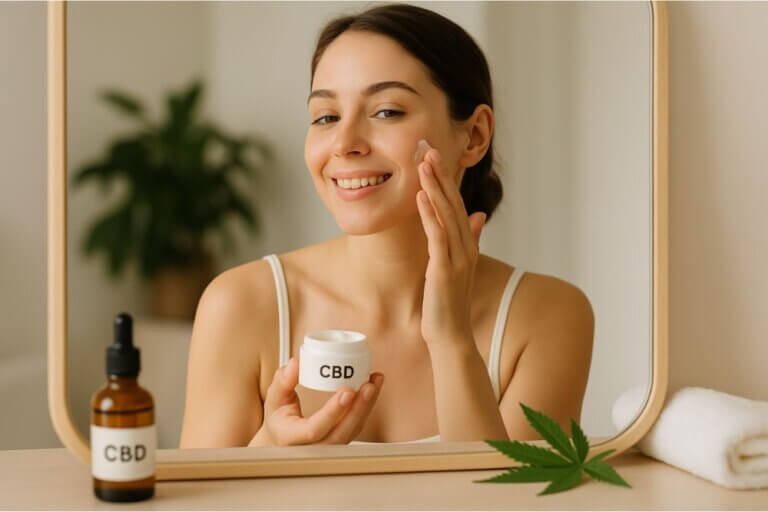
Healthy, radiant skin starts with balance, and that’s where CBD shines.
If your skin feels like it’s always stressed out, breaking out, drying out, or just looking tired, you’re not alone. Between harsh weather, UV rays, and everyday life, your skin works overtime to stay balanced. That’s where CBD comes in.
Once known mostly for its wellness uses, cannabidiol is now making waves in skincare and for good reason.
Researchers are finding that CBD may do far more than soothe the mind. When applied topically, it can help calm inflammation, balance oil, protect against environmental stressors, and even support a youthful glow. Science is starting to catch up with what many people already feel: CBD just works for skin that needs a little extra care.
Science Snapshot
- CBD regulates inflammation and balances oil production.
- Acts as an antioxidant, protecting cells from oxidative stress.
- Strengthens the skin barrier and supports hydration.
Why Everyone’s Talking About CBD in Skin Care
CBD, short for cannabidiol, is a natural compound found in the plant. It won’t make you “feel high.” What it does do is interact with your skin’s endocannabinoid system (ECS), a complex network that helps regulate oil production, cell renewal, and the skin’s overall response to stress.
This system keeps your skin in balance, which scientists call “homeostasis.” When that balance gets disrupted, it can lead to common issues like acne, redness, or dryness. CBD works with this system to help restore harmony and promote healthier skin from the surface down.
What the Latest Review Found
A 2024 scientific review published in MDPI Biomolecules gathered evidence from dozens of studies exploring CBD’s effects on the skin. Researchers concluded that CBD is a true multitasker offering antioxidant, anti-inflammatory, antibacterial, moisturizing, and even anti-aging benefits.
The review also noted that CBD may support the skin’s natural barrier, helping it retain hydration while reducing irritation and redness. It interacts with key receptors, including CB1, CB2, TRPV channels, and PPARs, to calm inflammation, neutralize free radicals, and improve overall skin comfort.
In short, CBD doesn’t just sit on the surface. It communicates directly with your skin’s own systems to promote a balanced, healthy complexion.
Natural Protection Against Skin Stress
Think of CBD as your skin’s daily bodyguard. Every day, your skin faces oxidative stress damage caused by pollution, sunlight, and free radicals. Over time, this leads to dullness, fine lines, and uneven tone.
CBD’s antioxidant power helps neutralize these harmful molecules, reducing oxidative damage before it becomes visible. The review also found that CBD works synergistically with the body’s own protective systems, like glutathione and superoxide dismutase, to keep cells resilient.
This natural defense doesn’t just help maintain your skin’s look today; it helps protect the long-term health of your complexion.
CBD and Common Skin Concerns
CBD’s versatility is one reason it’s taking over the skincare world. The review highlighted several areas where topical CBD shows real promise:
- Acne and Breakouts: By regulating oil production and reducing inflammation, CBD may help minimize acne flare-ups without over-drying the skin.
- Dryness and Irritation: CBD’s soothing properties make it ideal for sensitive skin or conditions like atopic dermatitis and eczema.
- Itch and Redness Relief: Through its interaction with neuroimmune pathways, CBD can help calm itchy or reactive skin, providing gentle comfort.
- Wound Healing Support: Early studies suggest CBD may help speed the healing process in minor wounds or abrasions by promoting cell renewal.
What’s unique about CBD is how it adapts to what your skin needs most, balancing oil when it’s overproducing, calming irritation when it’s inflamed, and hydrating when it’s dry.
Beyond Skin Repair – Hydration and Anti-Aging Support
Healthy, hydrated skin is youthful skin. According to the review, CBD helps strengthen the skin barrier, which is essential for locking in moisture and defending against pollutants.
It also promotes collagen production, the protein responsible for smoothness and elasticity. By reducing oxidative stress and supporting collagen synthesis, CBD may help soften the look of fine lines and give the skin a natural, plump appearance.
Even better, many users report that CBD-infused moisturizers make their skin feel nourished and refreshed, not greasy. That’s because CBD works with the skin’s natural oils instead of blocking them.
What to Watch For
Like any skincare ingredient, not all CBD products are created equal. The review emphasized a few key challenges and considerations for consumers:
- Purity and Quality: Look for products that use high-quality, lab-tested CBD. Full-spectrum or broad-spectrum options often include other beneficial plant compounds.
- Formulation Matters: Because CBD’s stability and absorption can vary, choose formulations designed specifically for topical use.
- Regulatory Standards: CBD skincare is still a new field, and labeling standards are evolving. Always buy from reputable brands that share their testing results.
CBD is showing incredible promise, but researchers also agree on one thing: more long-term clinical studies are needed to confirm its full range of benefits.
What This Means for Your Skin
If your skincare routine feels like a guessing game, CBD might just simplify it. Science suggests it’s one of the few natural ingredients that can do it all: calm, protect, hydrate, and restore balance.
CBD isn’t a miracle cure, and it won’t replace sunscreen or healthy habits, but it can become an everyday essential that supports your skin’s natural resilience.
Whether you’re dealing with breakouts, dryness, or just want that healthy, balanced glow, a CBD-infused serum or moisturizer could be your skin’s new best friend.
Original Study Section
Title: Cannabidiol in Skin Health: A Comprehensive Review of Topical Applications in Dermatology and Cosmetic Science
Date: August 2025
Authors: Aura Rusu; Andreea-Maria Farcaș; Octavia-Laura Oancea; Corneliu Tanase
Link to Study: Read on MDPI

Contributing Expert
Alan first discovered CBD while recovering from a sports injury — and he’s been a believer ever since. Over the years, he’s used CBD for sleep, skincare, easing anxiety, and even helping his family pet stay calm. With more than 20 years of experience running a marketing business, Alan now enjoys sharing scientific studies and personal experience with customers at Flourish + Live Well.